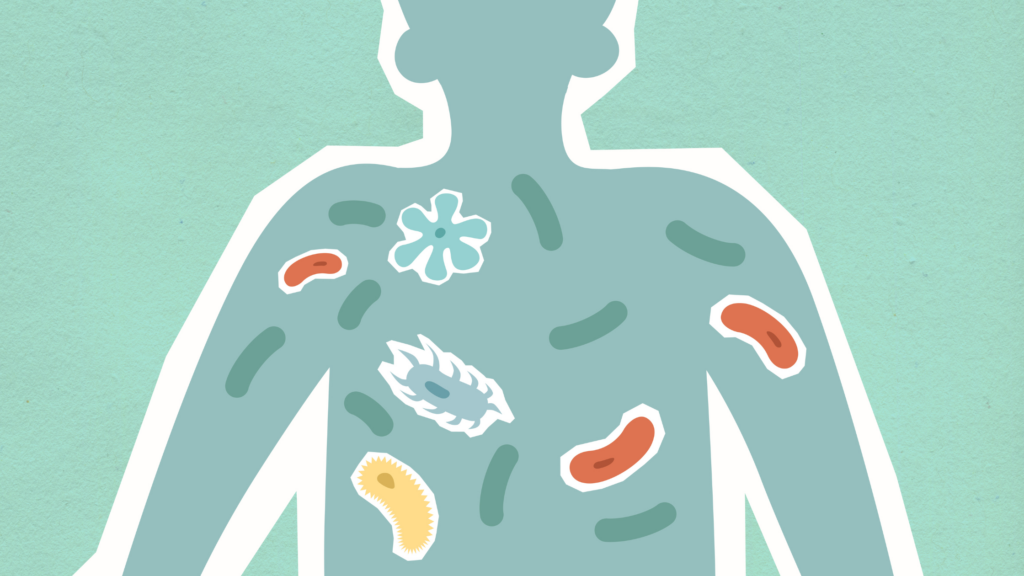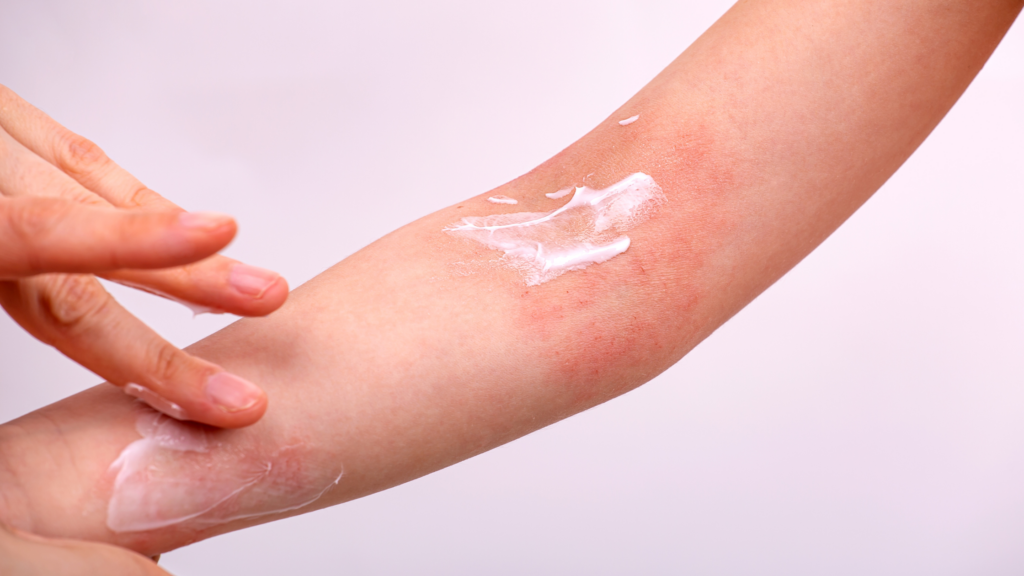
One supplement I use often with the patients I see in my practice is PPC, or phosphatidylcholine. Phosphatidylcholine benefits are profound, and so it has rightfully earned the moniker in our office as “liquid gold.” It’s one of those foundational supports that works at the cellular level.
Phosphatidylcholine is a major building block of cell membranes throughout the body, including the brain, gut, liver, lungs, and mitochondria. In other words, it helps support the structure that allows cells to function well in the first place.
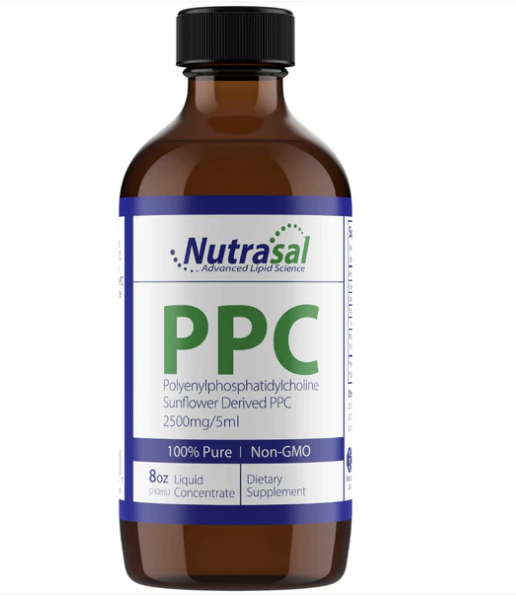
What Is Phosphatidylcholine?
Phosphatidylcholine is a phospholipid, and phospholipids make up cellular membranes. These membranes surround every cell in the body, as well as important structures inside the cell like the mitochondria.
A healthy cell membrane helps let nutrients in, keep harmful substances out, and support the creation of healthy new cells. In fact, cell membranes throughout the body, including the brain, are made up of about 65% polyenylphosphatidylcholine (PPC), which is one reason this nutrient is so foundational to overall health.
Since cell membranes play such a foundational role in how the body functions, it makes sense that supporting them can have wide-reaching effects.
Phosphatidylcholine Benefits at the Cellular Level
One of the biggest phosphatidylcholine benefits is that it supports the integrity and function of the cell membrane.
If the cell membrane is not functioning well, the rest of the cell often struggles too. When the membrane is supported, the cell is in a better position to communicate, protect itself, and do its job.
This kind of support is not usually a quick fix. Cellular repair and turnover take time. Some research suggests it can take up to 750 days to achieve a 50% turnover of cell walls, which is why foundational supplements like PPC often work best when used consistently as part of a holistic, comprehensive plan.
Phosphatidylcholine Benefits for the Liver and Bile Flow 💩
One of the most important phosphatidylcholine benefits is its role in supporting healthy bile production.
Bile helps the body absorb fats and fat-soluble vitamins, and it also helps move toxins and inflammatory compounds out of the body. When bile flow is sluggish, those compounds can be reabsorbed instead of cleared efficiently.
Therefore, PPC is a helpful support for kids who need help with digestion, constipation relief, detoxification, or overall inflammatory burden.
Check out the short video below about how PPC (“liquid gold”) helped this mom’s son and her friend’s child with constipation!
Phosphatidylcholine Benefits for Gut Health 🦠
Phosphatidylcholine also plays an important role in the gut lining.
The intestinal lining is one of the body’s key protective barriers, and phosphatidylcholine is a major part of that barrier. When the gut lining is inflamed or compromised, symptoms can ripple outward into digestion, immune function, and overall inflammation.
Phosphatidylcholine Benefits for the Brain and Nervous System 🧠
Phosphatidylcholine is also important for brain and nerve health.
It helps support choline and acetylcholine levels, which are important for learning, memory, cognitive function, and nerve signaling. This is part of why PPC can be such a helpful big-picture supplement. It is not working in just one narrow system.
Phosphatidylcholine Benefits for the Lungs and Mitochondria 🫁
Another lesser-known benefit of phosphatidylcholine is its role in the lungs.
Phosphatidylcholine is an important part of lung surfactant, the substance that helps the lungs function properly. It is also highly relevant for the mitochondria, where it supports membrane structure and cellular energy production.
Because mitochondria are involved in so many aspects of health, this is another reason phosphatidylcholine benefits can show up in multiple body systems at once.
Can You Get Enough Phosphatidylcholine From Food?
Food is always the foundation, but it can be hard to reach therapeutic levels of phosphatidylcholine through diet alone.
Foods that contain phosphatidylcholine include:
- Red meat
- Beef liver
- Eggs
- Fish
- Oysters
- Soybeans
- Sunflower seeds
These foods can absolutely help support overall intake, but in several cases targeted supplementation makes sense too.
Why I Use PPC in Practice
In my practice, I use PPC to support my patients at the cellular level.
This is not a supplement I use randomly. Like everything else I recommend, there is a time and place for it. Plans are individualized, supports are layered strategically, and the goal is always to strengthen the body and bolster health from the ground up.
PPC Dosing Basics
General PPC dosing can vary based on age, weight, and the form used.
A common starting framework is:
- Ages 6 months to 2 years: ⅛ tsp
- Children 2 years and older under 80 lbs: ¼ tsp
- Children over 80 lbs: ½ tsp
PPC is often taken with a digestive enzyme, and mixing strategies can help if a child does not like the taste of the liquid version.
PPC is also offered in capsule form. Dosing instructions by age available on our online store.
Final Thoughts on Phosphatidylcholine Benefits
Phosphatidylcholine benefits are broad because this nutrient supports the body at such a foundational level.
It helps support healthy cell membranes, bile flow, gut lining integrity, brain health, lung function, and mitochondrial health. Remember, overall health begins with cellular health.
References:
- Van Meer G, Voelker DR, Feigenson GW. Membrane lipids: where they are and how they behave. Nat Rev Mol Cell Biol. 2008 Feb;9(2):112-24. doi: 10.1038/nrm2330. PMID: 18216768; PMCID: PMC2642958.
- Gilbert SF. Developmental Biology. 6th edition. Sunderland (MA): Sinauer Associates; 2000. The Cell Death Pathways.: https://www.ncbi.nlm.nih.gov/books/NBK10103/
- Garth L. Nicolson, Michael E. Ash, Lipid Replacement Therapy: A natural medicine approach to replacing damaged lipids in cellular membranes and organelles and restoring function, Biochimica et Biophysica Acta (BBA) – Biomembranes, Volume 1838, Issue 6,2014, Pages 1657-1679,ISSN 0005-2736, https://doi.org/10.1016/j.bbamem.2013.11.010.
- Félix M. Goñi, The basic structure and dynamics of cell membranes: An update of the Singer–Nicolson model, Biochimica et Biophysica Acta (BBA) – Biomembranes, Volume 1838, Issue 6, 2014, Pages 1467-1476, ISSN 0005-2736, https://doi.org/10.1016/j.bbamem.2014.01.006.
- Van Berge Henegouwen GP, van der Werf SD, Ruben AT. Fatty acid composition of phospholipids in bile in man: promoting effect of deoxycholate on arachidonate. Clin Chim Acta. 1987 May 29;165(1):27-37. doi: 10.1016/0009-8981(87)90215-4. PMID: 3111757.
- Agassandian M, Mallampalli RK. Surfactant phospholipid metabolism. Biochim Biophys Acta. 2013 Mar;1831(3):612-25. doi: 10.1016/j.bbalip.2012.09.010. Epub 2012 Sep 29. PMID: 23026158; PMCID: PMC3562414.
- Stremmel W, Ehehalt R, Staffer S, Stoffels S, Mohr A, Karner M, Braun A. Mucosal protection by phosphatidylcholine. Dig Dis. 2012;30 Suppl 3:85-91. doi: 10.1159/000342729. Epub 2013 Jan 3. PMID: 23295697.
- Zhou MM, Xue Y, Sun SH, Wen M, Li ZJ, Xu J, Wang JF, Yanagita T, Wang YM, Xue CH. Effects of different fatty acid compositions of phosphatidylcholine on the brain function of dementia mice induced by scopolamine. Lipids Health Dis. 2016 Aug 24;15(1):135. doi: 10.1186/s12944-016-0305-5. PMID: 27558491; PMCID: PMC4997672.
- Mehedint MG, Zeisel SH. Choline’s role in maintaining liver function: new evidence for epigenetic mechanisms. Curr Opin Clin Nutr Metab Care. 2013 May;16(3):339-45. doi: 10.1097/MCO.0b013e3283600d46. PMID: 23493015; PMCID: PMC3729018.
- Duric, M., Sivanesan, S. and Bakovic, M. (2012), Phosphatidylcholine functional foods and nutraceuticals: A potential approach to prevent non-alcoholic fatty liver disease. Eur. J. Lipid Sci. Technol., 114: 389-398. https://doi.org/10.1002/ejlt.201100350
- Schuler MH, Di Bartolomeo F, Mårtensson CU, Daum G, Becker T. Phosphatidylcholine Affects Inner Membrane Protein Translocases of Mitochondria. J Biol Chem. 2016 Sep 2;291(36):18718-29. doi: 10.1074/jbc.M116.722694. Epub 2016 Jul 11. PMID: 27402832; PMCID: PMC5009247.
- Jelske N. van der Veen, John P. Kennelly, Sereana Wan, Jean E. Vance, Dennis E. Vance, René L. Jacobs, The critical role of phosphatidylcholine and phosphatidylethanolamine metabolism in health and disease, Biochimica et Biophysica Acta (BBA) – Biomembranes, Volume 1859, Issue 9, Part B,2017, Pages 1558-1572, ISSN 0005-2736, https://doi.org/10.1016/j.bbamem.2017.04.006.