Mother’s Day is a reminder to celebrate everything moms give to their families. But it’s also a reminder that moms need support, too. One of the most important, and often overlooked, parts of a mom’s health is her brain and mental health. This is where the conversation about the connection between omega-3s and postpartum depression comes up.
As a pediatrician, although my patients may be the little ones… when we support children, we’re really supporting the whole family. So today, let’s turn the attention to you, moms.
Why the Postpartum Period Matters for Moms
One of the most vulnerable times in a woman’s life, physically and emotionally, is the postpartum period.
Research estimates that 10–20% of women experience postpartum depression. [1]
But even beyond a formal diagnosis, many moms experience:
- Mood changes
- Increased stress
- Mental fatigue
- Difficulty focusing or sleeping
While many factors play a role, such as hormonal shifts, sleep deprivation, stress, and inflammation, nutrient status is one piece that’s often overlooked.
Omega-3s and Postpartum Depression: The Missing Link
One area that continues to gain attention in the research is omega-3 fatty acid status.
During pregnancy and breastfeeding, mothers transfer large amounts of DHA (an omega-3 fat) to support their baby’s brain and nervous system development. [2]
That means many moms become depleted themselves. And that depletion can directly impact brain health, mood regulation, and overall mental well-being.
What the Research Shows: The Link Between Omega-3s and Postpartum Depression
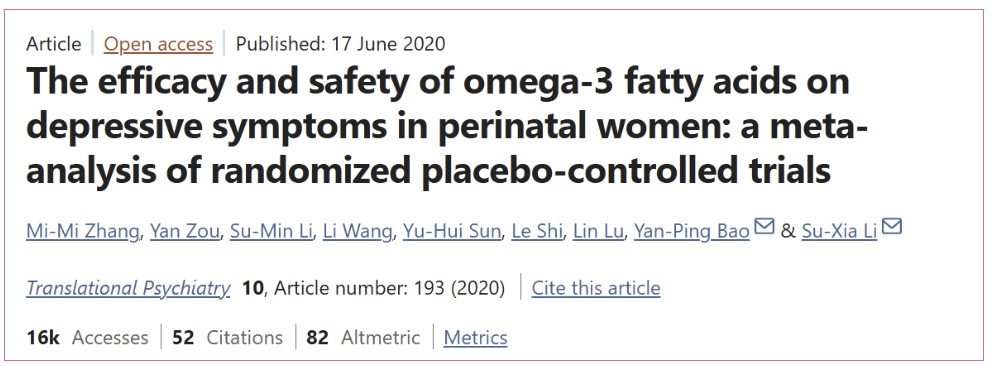
A meta-analysis published in Translational Psychiatry looked at eight randomized placebo-controlled trials.
It found that omega-3 supplementation significantly improved depressive symptoms in pregnant and postpartum women and was well tolerated. [3]
Researchers also noted stronger effects when formulas contained higher levels of EPA, an omega-3 known for its anti-inflammatory properties.
This highlights how important the right type and dose of omega-3s can be.
Omega-3S and Postpartum Depression: Beyond the Postpartum Period
While there is significant research that focuses on postpartum depression, this connection extends beyond that window.
Omega-3s play a broader role in:
- Brain function
- Mood regulation
- Inflammation balance
- Nervous system support
So even if you’re years past the postpartum stage, supporting omega-3 levels can still make a meaningful difference in how you feel day to day.
Supporting Your Body with Omega-3s
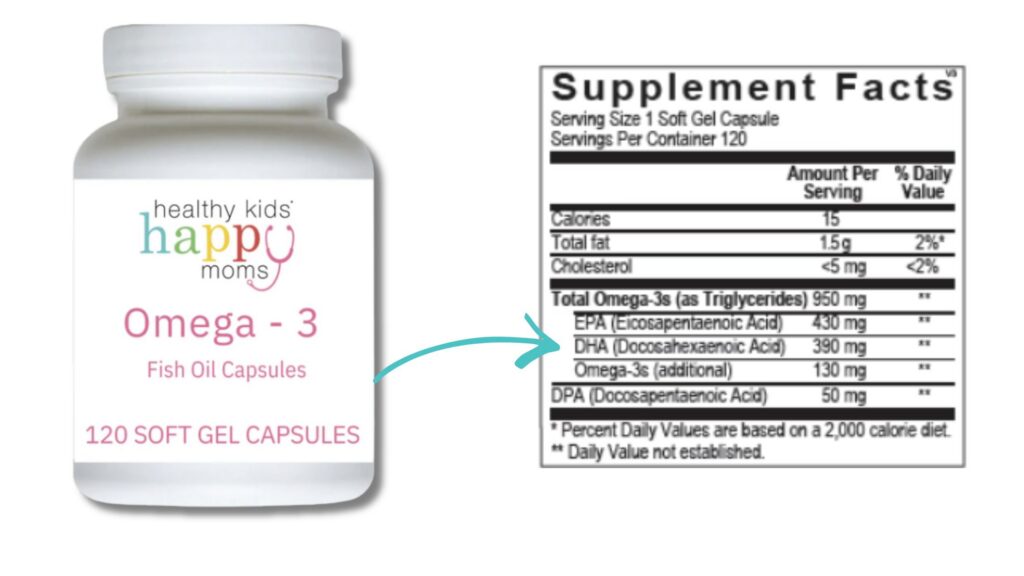
Our HKHM Omega-3s are designed to provide therapeutic doses of both EPA and DHA.
For many moms, this becomes a foundational piece of supporting both physical and mental health.

A Seasonal Bonus for Moms
As we head into late spring and early summer, omega-3s also provide additional support for:
- Immune balance during seasonal allergies
- Airway inflammation linked to asthma symptoms
- Skin barrier health for heat-related eczema flares
Omega-3s are a key aspect of the strategic supplement approach I use with the patients I see in my practice.
Remember, when moms feel better, everything else in the family tends to feel a little more supported, too.
References:
- Carlson K, Mughal S, Azhar Y, et al. Perinatal Depression. [Updated 2025 Jan 22]. In: StatPearls [Internet]. Treasure Island (FL): StatPearls Publishing; 2025 Jan-. Available from: https://www.ncbi.nlm.nih.gov/books/NBK519070/
- Basak S, Mallick R, Duttaroy AK. Maternal Docosahexaenoic Acid Status during Pregnancy and Its Impact on Infant Neurodevelopment. Nutrients. 2020 Nov 25;12(12):3615. doi: 10.3390/nu12123615. PMID: 33255561; PMCID: PMC7759779.
- Zhang, M. M., Zou, Y., Li, S. M., Wang, L., Sun, Y. H., Shi, L., Lu, L., Bao, Y. P., & Li, S. X. (2020). The efficacy and safety of omega-3 fatty acids on depressive symptoms in perinatal women: A meta-analysis of randomized placebo-controlled trials. Translational Psychiatry, 10(1), 193. https://doi.org/10.1038/s41398-020-00886-3