As we move into spring, many families notice a shift… and not always in the way they expect. What is surprising for many parents to learn is how histamine affects your child’s brain in profound ways.
Allergy season ramps up, pollen is everywhere, and at the same time, kids are heading into end-of-year testing, exams, and increased academic demands. And suddenly, your child feels different. Maybe they’re more emotional than usual. Perhaps focus is harder. Maybe sleep is off, or everything just feels a little more intense.
It’s easy to chalk this up to stress or a busy time of year. But there’s often something deeper driving these changes: histamine.
How Histamine Affects Your Child’s Brain (Especially During Allergy Season)
Most people think of histamine as something that causes classic allergy symptoms: runny nose, itchy eyes, and sneezing.
But histamine also plays a major role in the brain. It acts as an excitatory neurotransmitter, meaning it stimulates the nervous system and increases alertness and reactivity.
So when histamine levels rise, it doesn’t just affect the body—it changes how the brain functions. In other words, when histamine is elevated, the brain essentially shifts into a more “turned on” state.
For some kids, this can look like heightened emotions or quicker frustration. For others, it shows up as restlessness, difficulty focusing, or trouble winding down at night.
This is why many parents notice behavior changes during allergy season and can’t quite connect the dots. It’s not just a coincidence. It’s biochemistry of how histamine affects your child’s brain.
Why Symptoms Spike During Allergy Season
During allergy season, your child’s body is naturally producing more histamine in response to environmental triggers like pollen.
At the exact same time, their brain is being asked to do more—focus longer, regulate emotions, and perform academically. Now you have a nervous system that’s already more stimulated, paired with higher demands.
That combination can make even small challenges feel bigger.
How Histamine Affects Your Child’s Brain: Where Food Comes Into Play
What many parents don’t realize is that histamine isn’t just influenced by the environment.
Food can play a significant role too. Some foods naturally contain histamine, while others trigger the body to release more of it or make it harder to break it down.
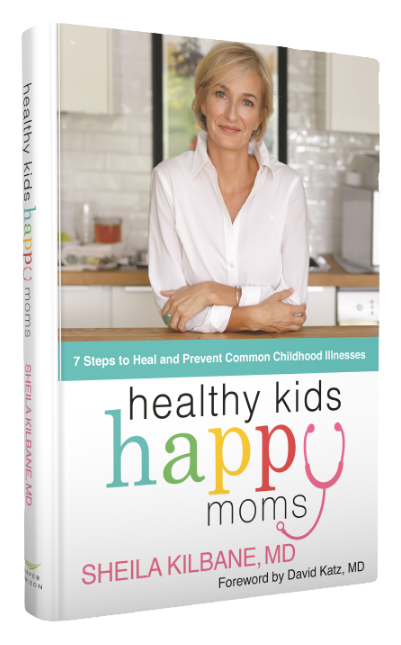
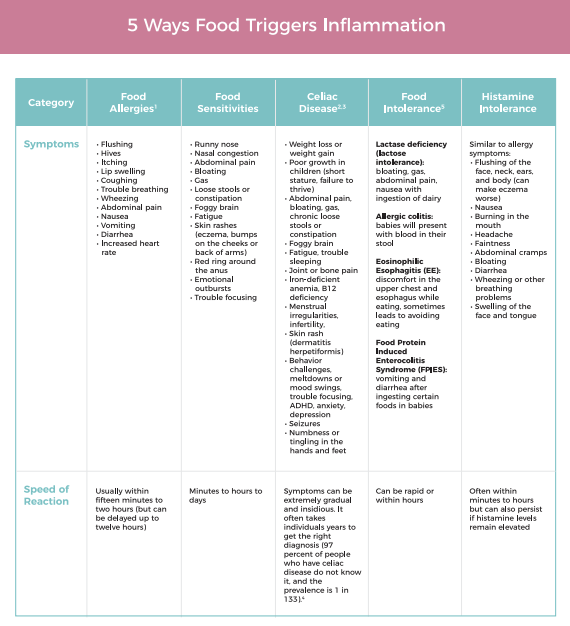
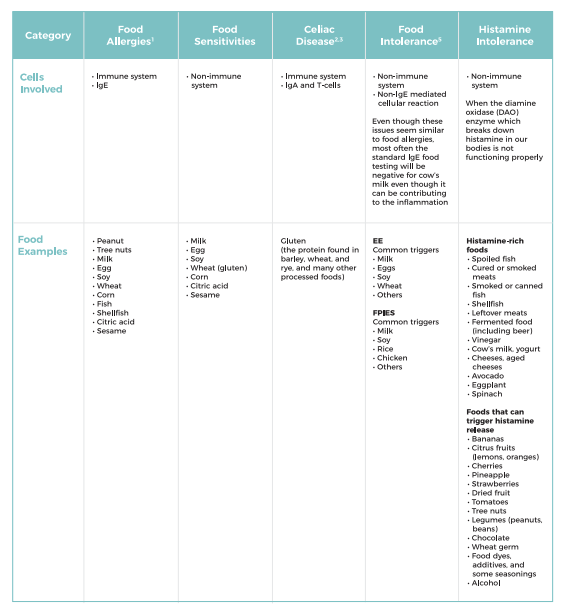
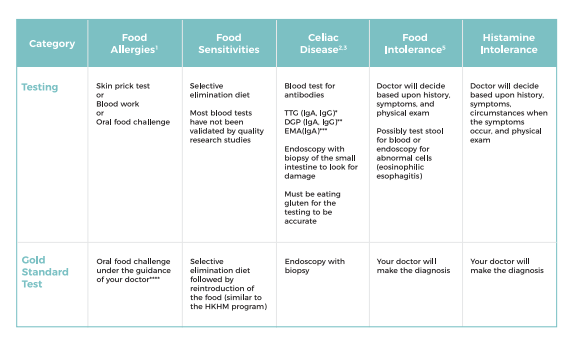
Take a look at this table below from my book, Healthy, Kids, Happy Moms. Pay special attention to the “histamine intolerance” column.
Histamine Intolerance (What to Look For)
If histamine is building up in the body, it can show up in ways that go beyond typical allergies.
You may see things like flushing, headaches, stomach discomfort, swelling of the face or tongue, or changes in breathing. Some children also experience nausea or bloating, especially after certain foods.
And because histamine also affects the brain, these physical symptoms can be paired with changes in mood, focus, or sleep.
Certain foods—like aged cheeses, fermented foods, leftovers, citrus, chocolate, and food additives—can contribute to this, especially during times when histamine levels are already elevated.
What You Can Do to Support Your Child
The goal isn’t to eliminate everything or overhaul your child’s diet overnight.
It’s to support their system so it can better regulate histamine, especially during high-demand seasons like spring.
Start Before Symptoms Peak
One of the most helpful strategies is starting support early. As I always say, prevention is the best medicine!
Because supplements work with the body’s natural processes, giving them a couple of weeks before allergy season peaks can make a noticeable difference.
Support Histamine Balance
This is where targeted support can be really helpful.
HKHM Hist-Assist is designed to help the body regulate histamine and support a more balanced immune response. For many families, this becomes a key tool during allergy season when behavior, sleep, or focus start to shift.
I also suggest incorporating more low-histamine foods. Those include:
- Freshly cooked proteins (chicken, turkey, beef, very fresh fish)
- Low-histamine vegetables (zucchini, carrots, cucumbers, broccoli, cauliflower)
- Low-histamine fruits (apples, pears, blueberries, mango)
- Gluten-free grains (white rice, quinoa, oats)
- Healthy fats (olive oil, coconut oil)
- Dairy alternatives (coconut milk, oat milk, almond milk if tolerated)
- Fresh herbs (basil, parsley, cilantro)

Take a More Comprehensive Approach When Needed
If your child is also dealing with things like asthma, eczema, or more persistent allergy symptoms, it may make sense to zoom out a bit.
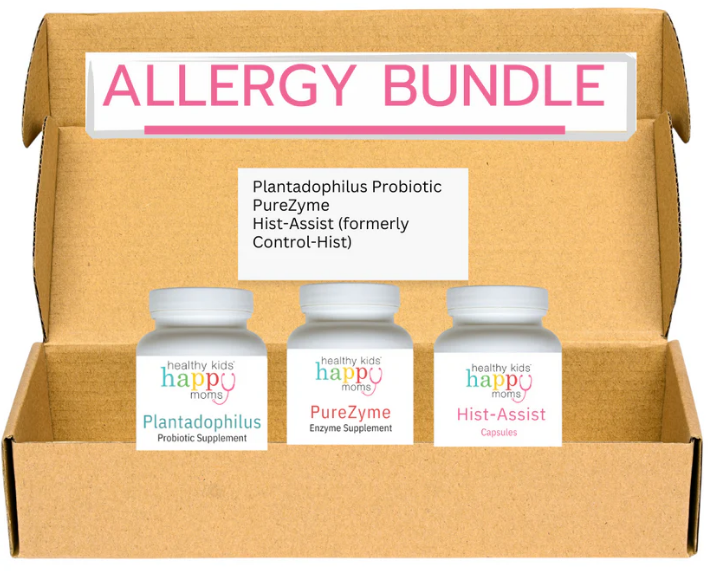
Our HKHM Allergy Bundle combines histamine support with gut and digestive support, helping address multiple layers that can contribute to inflammation and immune reactivity.
How Histamine Affects Your Child’s Brain: When to Dig Deeper
If these patterns show up consistently (not just during allergy season) it may be worth taking a closer look at underlying factors like gut health, food triggers, and overall inflammation.
Often, these systems are connected in ways that aren’t immediately obvious.
Remember, histamine plays a much bigger role in your child’s health than most people realize. It doesn’t just drive allergy symptoms. It also influences how your child thinks, feels, and responds to the world around them.
Once you understand what’s happening, you can take simple, targeted steps to support your child in a meaningful way. If you would like additional support in exploring if histamine intolerance is affecting your child, book a free 15-minute informational call with one of our patient care coordinators.