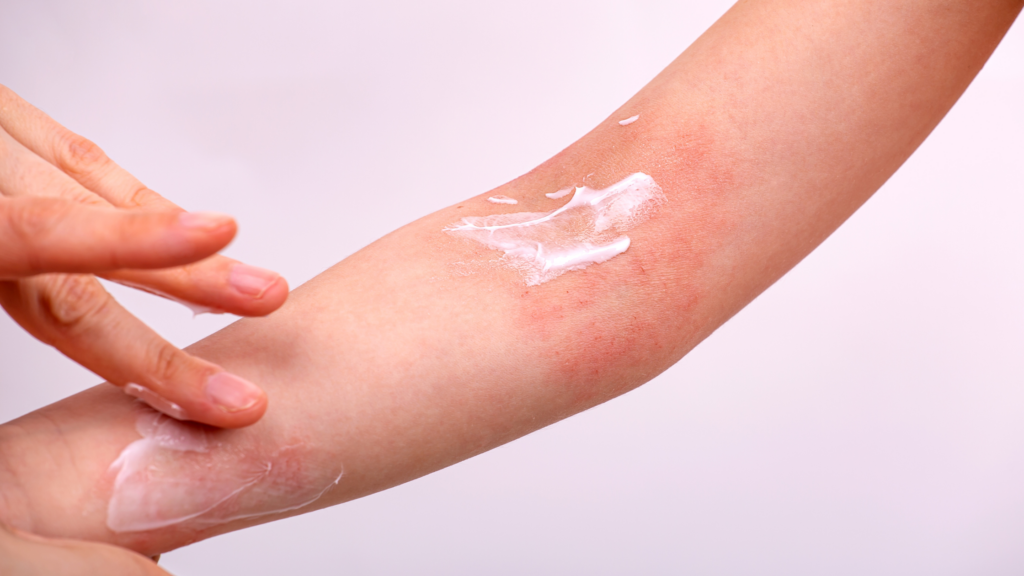
Is your home making your child’s eczema worse? Let’s explore the hidden household triggers of eczema.
I’ve talked a lot about how both the skin and the gut microbiome affect eczema. While these do have a profound impact on eczema, I want to shine a light on something that we often see fly under the radar: the environment inside your home.
Remember, environmental toxins are one of the five main triggers of inflammation!

Hidden Household Triggers Wreaking Havoc on the Skin
October is Eczema Awareness Month, and so we wanted to address this oft-forgotten side of eczema flares: environmental culprits.

Everyday household items, like cleaning supplies, personal care products, toys, and even new furniture, paint, or carpets, can tip off the skin’s inflammatory “storm.”
The tricky part? Most of the time, these triggers hide in plain sight.
The chart below illustrates the categories of household items, explains why they can be harmful, and provides safer alternatives.

Cleaning Recommendations to Reduce Household Irritants
Avoid These Products to Minimize Household Triggers of Eczema
Avoid bleach, ammonia, and harsh disinfectants, which can damage the skin barrier. Scented sprays and air fresheners often contain VOCs and phthalates that worsen eczema.
Daily/As Needed Recommendations
Air Quality Maintenance
Run a HEPA air purifier in bedrooms and common areas to reduce dust, mold spores, and VOCs.
Open windows for fresh air (when pollen and outdoor allergens are low).
Wipe High-Touch Surfaces
Use microfiber cloths with a non-toxic, fragrance-free cleaner (e.g., Branch Basics, Force of Nature, or vinegar + water).
Wipe down doorknobs, light switches, and remotes to reduce bacteria and dust accumulation.
Vacuum with HEPA Filter
Use a HEPA vacuum (e.g., Miele, Dyson, Shark) to trap allergens and dust mites. Standard vacuum cleaners tend to beat into the carpet and stir up dust, so you need a vacuum cleaner that keeps dust within the machine (i.e., one that has a low-dust exhaust).
Focus on carpets, rugs, and upholstered furniture.
Weekly Routine
Wash Bedding & Linens
Use a fragrance-free, dye-free detergent (e.g., Molly’s Suds, Seventh Generation). Wash in hot water (130°F/54°C) to kill dust mites and bacteria. Add 1/2 cup of vinegar during the rinse cycle to remove allergens.
Clean Floors & Hard Surfaces
Mop floors with warm water and vinegar or a non-toxic cleaner. Avoid using bleach or ammonia-based cleaners, as they can irritate the skin and lungs.
Dust with Microfiber Cloths
Dust using a damp microfiber cloth to prevent particles from becoming airborne.
Biweekly/Monthly Tasks
Wash Curtains & Blinds
Wash or dry-clean curtains. For blinds, a quick wipe-down can remove dust buildup. Consider replacing fabric curtains with roller blinds to minimize dust accumulation.
Deep Clean Your Laundry Machine
Perform an empty hot wash with a biological washing powder or soda crystals to clear out any detergent buildup from the machine’s seals, which can irritate the skin.
Wash Pillows & Duvets
To keep dust mites at bay, wash pillows and duvets in hot water every 4–6 weeks. Cover pillows and mattresses with anti-dust mite covers.
Clean Vents
Dust and wipe down all heating, ventilation, and air conditioning (HVAC) vents to prevent dust from circulating throughout the house.
Declutter to Reduce Dust Traps
Remove unnecessary items that collect dust, like books on open shelves, knick-knacks, and excess textiles.
Every 3-6 Months Protocols
Deep Clean Mattresses & Pillows
Use a HEPA vacuum and encase mattresses and pillows with dust mite-proof covers.
Consider professional steam cleaning or ozone treatment for deeper cleaning.
Wash Curtains & Area Rugs
Wash or steam clean fabric-based items that collect dust and allergens.
Check for Mold in Bathrooms & Basements
Use Benefect Decon 30 or hydrogen peroxide-based cleaners to treat any visible mold.
Consider using a dehumidifier to maintain humidity below 50%.
Additional Tips for Managing Household Triggers of Eczema
Maintain low humidity: Keep indoor humidity below 50% using a dehumidifier or air conditioner, as dust mites thrive in high-humidity environments.
Choose eczema-friendly materials: Opt for hard-surface flooring, such as wood or tile, instead of wall-to-wall carpeting.
Choose furniture with wipeable surfaces, such as leather or vinyl, over upholstered items.
Prioritize airflow: Open windows daily to air out rooms and maintain moderate air temperatures (around 68–72°F) to prevent excessive sweating or dry air.
Be mindful of cleaning products: When cleaning, wear protective gloves and opt for “old-fashioned” cleaners like white vinegar or baking soda, which lack the added fragrances and chemicals found in many commercial products.
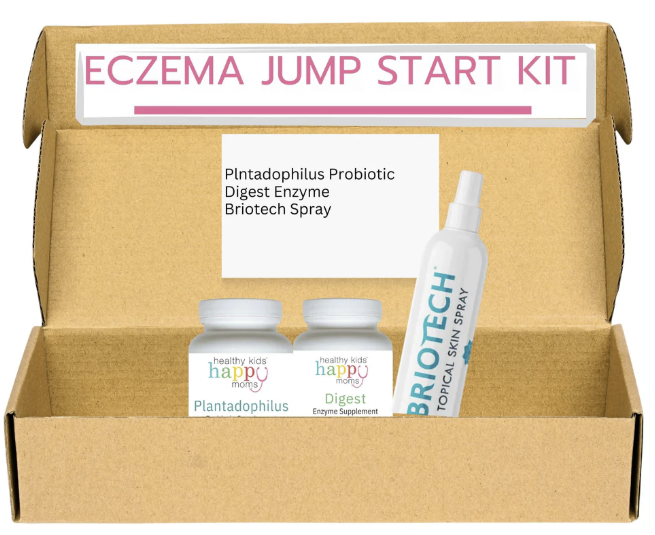
Address the skin and gut microbiome: Get started with the Eczema Jump Start Kit to address both the skin and gut microbiome in your treatment plan. It consists of the HKHM Plantadophilus and HKHM Digestive Enzymes to help restore and optimize gut health, plus Briotech Topical Skin Spray to tackle the skin microbiome.