This month marks the one-year anniversary of my TEDx talk, “Why Childhood Eczema Rates Are a Universal Alarm.”
When I first prepared for that talk, I knew I wanted to speak about eczema.
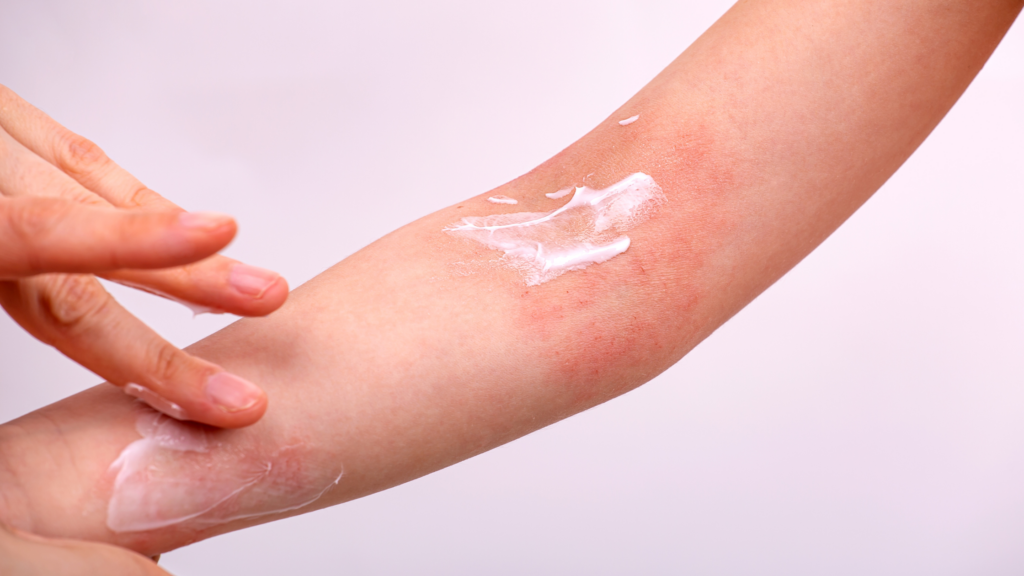
But not just eczema as an itchy skin condition. I wanted to talk about eczema as a signal.
A signal that children’s bodies are reacting to a world that has changed faster than our biology can adapt.
Childhood eczema rates have risen dramatically over the last several generations, and eczema is not the only condition increasing in children. We are also seeing more asthma, allergies, food allergies, obesity, digestive issues, chronic congestion, reflux, and recurrent ear and sinus infections.
As an integrative pediatrician, I do not see these as isolated symptoms. I see them as clues.
And those clues are telling us something important about the gut, the immune system, inflammation, and the modern world our children are growing up in.

The Conversation That Reminded Me Why This Message Matters
When I was rehearsing my TEDx talk, I was not expecting to have one of the most meaningful conversations of the entire trip.
It was just me and a handful of crew members, including Greg, the photographer.
After hearing part of the talk, Greg came up and shared that his 30-year-old daughter had suffered from eczema her entire life.
He told me that the way I explained eczema was something he had never heard before.
That moment stayed with me. This is exactly why I do this work.
Check out what I immediately texted one of my team members after that conversation!

So many families are still being told that eczema, allergies, asthma, reflux, congestion, ear infections, and chronic childhood symptoms are separate problems.
They are handed a cream, a prescription, an inhaler, an antibiotic, or an antacid.
And sometimes those tools are needed.
But if we stop there, we miss the bigger picture. We miss the pattern. We miss the body’s alarm system.
Why Childhood Eczema Rates Are Rising
Childhood eczema rates are not just about skin.
They are part of a much larger story.
We are seeing more chronic illness in children than ever before in our history. The numbers are staggering:
● More than 40% of school-aged children and adolescents have at least one chronic health condition
● Eczema rates have increased dramatically since the 1940s
● Obesity rates have followed a similar upward trend
● Asthma and food allergies have also become more common
These numbers matter because children’s bodies are not broken. They are responding.
They are responding to food, stress, environmental exposures, disrupted sleep, medication use, antibiotics, antacids, processed foods, and a microbiome that is not getting the same inputs children received generations ago.
How the Modern Environment Affects Childhood Eczema Rates
Our bodies, especially our microbiomes, are wired for a different world.
A world with:
● Dirt
● Fermented foods
● Outdoor microbes
● Fiber-rich foods
● Less ultra-processed food
● More time outside
● More microbial diversity
But many kids today are growing up in a world with:
● Antibiotics early in life
● Antacids for reflux
● Processed foods filled with preservatives
● Artificial dyes
● Pesticides
● Less exposure to nature, animals, and soil
● Chronic, habitual medication use, both over-the-counter and prescription
These things do not just irritate the body.
They can chip away at the ecosystem within us.
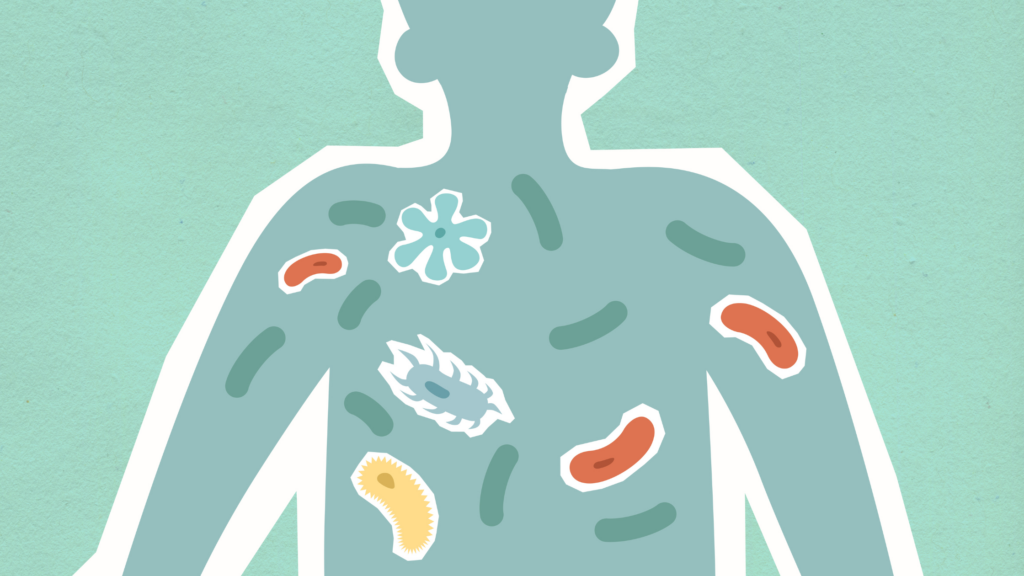
That ecosystem is the microbiome: the trillions of microbes that help regulate immunity, digestion, inflammation, and even how resilient the body can be when exposed to viruses, bacteria, allergens, and stressors.
Everything we do is either helping or harming the microbiome.
When the microbiome is off, everything is impacted.
That is when we start to see common childhood illnesses such as:
● Eczema
● Allergies
● Asthma
● Chronic ear infections
● Chronic sinus infections
● Reflux
● Constipation
● Loose stools
● Chronic runny nose
● Food reactivity
This is why childhood eczema rates are a universal alarm.
They are telling us to look deeper.
The Parent Frustrations Behind Childhood Eczema
Before my TEDx talk, I had also been going through old materials and found a survey I sent to parents back in 2015.
The survey asked a simple question:
“How can I best serve you with meaningful programs?”

The responses stopped me in my tracks because so many of the same frustrations parents shared in 2015 are still the same frustrations parents bring into my practice today.
Parents wrote things like:
● “Not being able to pinpoint the cause of recurring illness”
● “How something as little as a runny nose can immediately turn into nebulizer treatments and oral steroids overnight”
● “Ear infections, congestion, reflux and not being able to figure out reasons or if she’ll outgrow it”
● “Not being able to find a solution after going to traditional doctors, integrative doctors, specialists…”
● “Not being able to find the root cause of asthma, eosinophilic esophagitis, etc.”
A decade later, parents are still asking the same questions.
Why does my child keep getting sick?
Why does every runny nose turn into something bigger?
Why does the eczema come back as soon as we stop the cream?
Why are we stuck in this cycle?
Why does it feel like we are playing whack-a-mole with symptoms?
Many parents have tried what feels like everything by the time they reach us.
And what they are really looking for is not a trendy supplement, a complicated protocol, or one more thing to manage.
They are looking for a clear explanation.
They are looking for the root cause.
They are looking for a way to help their child’s body become more resilient.
A Root-Cause Approach to Better Skin Health
One thing became very clear as I reflected on those old survey responses and my TEDx talk:
Our solutions are timeless.
No fads.
No flashy social media trends.
No one-supplement cure-all gimmicks.
Just get back to the basics to achieve real results, again and again.
My tried-and-true process is simple:
● Uncover the root causes of inflammation
● Remove the triggers of that inflammation
● Add in more of the right inputs to restore balance in the body
This is the same approach I use for eczema, allergies, asthma, chronic congestion, recurrent infections, reflux, constipation, and other common childhood symptoms.
It is also the foundation of my book, Healthy Kids, Happy Moms.
The goal is not to chase every symptom separately, but to understand why the body is inflamed in the first place.
What Parents Can Do Today
If your child is struggling with eczema, allergies, asthma, reflux, recurrent illness, or chronic congestion, I do not want you to feel discouraged.
I want you to feel oriented.
The rise in childhood eczema rates is an alarm, but an alarm is not the same thing as a life sentence.
It is a signal to look at the foundation.
Start with the basics:
● Food
● Sleep
● Hydration
● Gut health
● Daily bowel movements
● Environmental triggers
● Stress and nervous system support
● Nutrient status
● Microbiome diversity
Even small inputs matter and make a difference.
Every meal, every snack, every outdoor walk, every bedtime routine, every reduction in unnecessary inflammatory triggers can help move the body toward balance.
Here are two places to start with:
Food Reset
One of the simplest places to begin is with food.
My free 7-Day Mini Cleanse for Kids was designed to help families decrease the junk and make room for good, healthy nutrition in a safe and manageable way.
This is not about restriction.
It is about helping the body get back to a better baseline.
For many families, a simple food reset can make the next steps clearer.
Support the Gut and Immune System

Food always comes first, but strategic supplements can be an important part of supporting the foundation.
The HKHM Foundational Bundle was designed to support the gut, immune system, digestion, vitamin D status, omega-3 intake, and overall resilience.
It can be a helpful place to begin when families are ready to support the body more intentionally alongside food and lifestyle changes.
As always, work with your child’s healthcare provider if your child has a complex medical history, takes medications, has allergies, or has reacted strongly to supplements in the past.
One Year Later, Childhood Eczema Rates Still Matter
A year after giving my TEDx talk, I feel even more strongly that we need to keep this conversation going.
Childhood eczema rates are not just a dermatology issue. They are a universal alarm. They are reminding us that children’s bodies are carrying a greater inflammatory burden than ever before.
They are reminding us that the microbiome matters.
They are reminding us that food, environment, sleep, medications, toxins, stress, and gut health all work together.
They are reminding us that parents deserve more than symptom management.
And they are reminding us that children are wired to heal when we give their bodies the right support.
This is why I will keep talking about eczema. Not because eczema is the only issue. But because eczema is often one of the earliest, clearest signs that the body is asking us to look deeper.
References
- National Center for Chronic Disease Prevention and Health Promotion. Managing Chronic Health Conditions in Schools (archived). CDC Healthy Schools. Reissued October 20, 2021. Retrieved from https://archive.cdc.gov/www_cdc_gov/healthyschools/chronicconditions.htm
- Taylor B, Wadsworth J, Wadsworth M, Peckham C. Changes in the reported prevalence of childhood eczema since the 1939-45 war. Lancet. 1984 Dec 1;2(8414):1255-7. doi: 10.1016/s0140-6736(84)92805-8. PMID: 6150286.
- Langan SM, Mulick AR, Rutter CE, Silverwood R, Asher I, García‐Marcos L, Ellwood E, Bissell K, Chiang CY, Sony AE, Ellwood P, Marks G, Mortimer K, Martínez‐Torres AE, Morales E, Perez‐Fernandez V, Robertson S, Williams H, Strachan DP, Pearce N; the Global Asthma Network Phase I Study Group. Trends in eczema prevalence in children and adolescents: A Global Asthma Network Phase I Study. Clin Exp Allergy. 2023 Mar;53(3):337–52. doi: 10.1111/cea.14276. Epub 2023 Feb 8. PMCID: PMC10946567.
- von Hippel PT, Nahhas RW. Extending the history of child obesity in the United States: The Fels Longitudinal Study, birth years 1930-1993. Obesity (Silver Spring). 2013 Oct;21(10):2153-6. doi: 10.1002/oby.20395. Epub 2013 May 31. PMID: 23512972; PMCID: PMC3695078.
- Stierman B, Afful J, Carroll MD, et al. National Health and Nutrition Examination Survey 2017–March 2020 prepandemic data files development of files and prevalence estimates for selected health outcomes. Natl Health Stat Report. 2021;158.
- Redd SC. Asthma in the United States: burden and current theories. Environ Health Perspect. 2002 Aug;110 Suppl 4(Suppl 4):557-60. doi: 10.1289/ehp.02110s4557. PMID: 12194886; PMCID: PMC1241205.
- Time trends in the epidemiology of food allergy in England: an observational analysis of Clinical Practice Research Datalink data. Turner, Paul J et al.The Lancet Public Health, Volume 9, Issue 9, e664 – e673