As an integrative pediatrician, I always recommend finding ways to limit sugar on Halloween—but despite that advice, Halloween has always been one of my favorite holidays!
When I was in elementary school in Avon Lake, Ohio, around 1980, we had a big Halloween costume contest every year. One year, I decided I was going to win—and I started preparing months in advance.
I spent weeks secretly making long witch nails with Elmer’s glue in my school pencil tray. My mom and I made my cape and dress, I sculpted a giant green clay nose, and on Halloween morning, she even painted my teeth black. Super healthy, right?
Anyway, I won! It must have been the homemade costume category, haha!
Spooky Sugar Stats
Now that spooky season is here, giant bags of candy are everywhere—and we eat a LOT of it. That’s why finding simple ways to limit sugar on Halloween can make the holiday a little healthier without taking away the fun.
Americans buy nearly 600 million pounds of candy for Halloween each year, and the average child consumes about 3 cups—or roughly 144 teaspoons—of sugar on Halloween.
Sugar also activates the brain’s reward system, and research suggests that repeated high-sugar intake may increase cravings and contribute to addictive-like eating behaviors.
Ever notice how once your child—or you—starts eating Halloween candy, it can be really hard to stop?

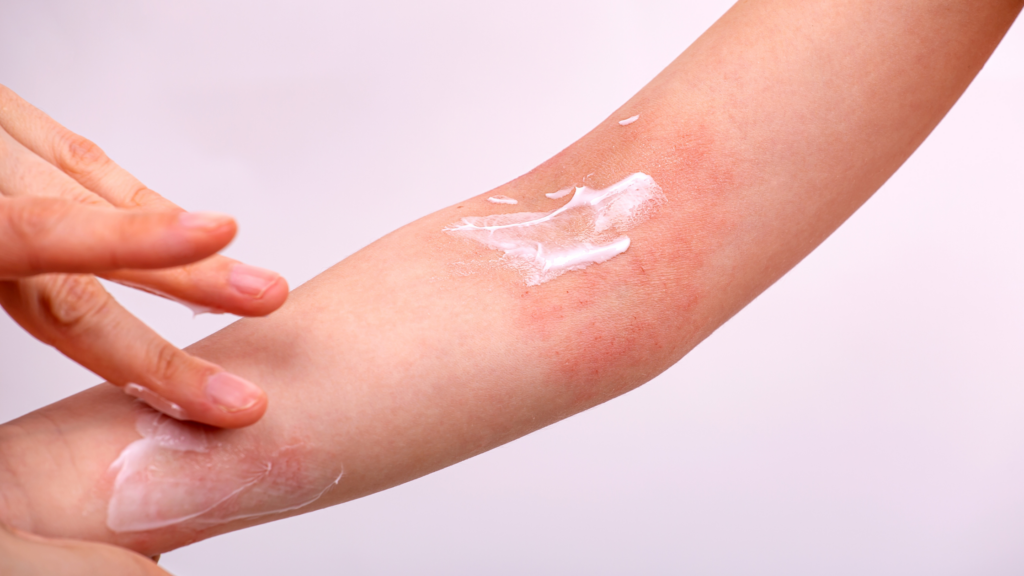
Dressing up and trick-or-treating are so much fun, but eating bags full of highly processed candy can turn Halloween and the days following it into a real nightmare, especially for parents and kids struggling with eczema or other inflammatory conditions.
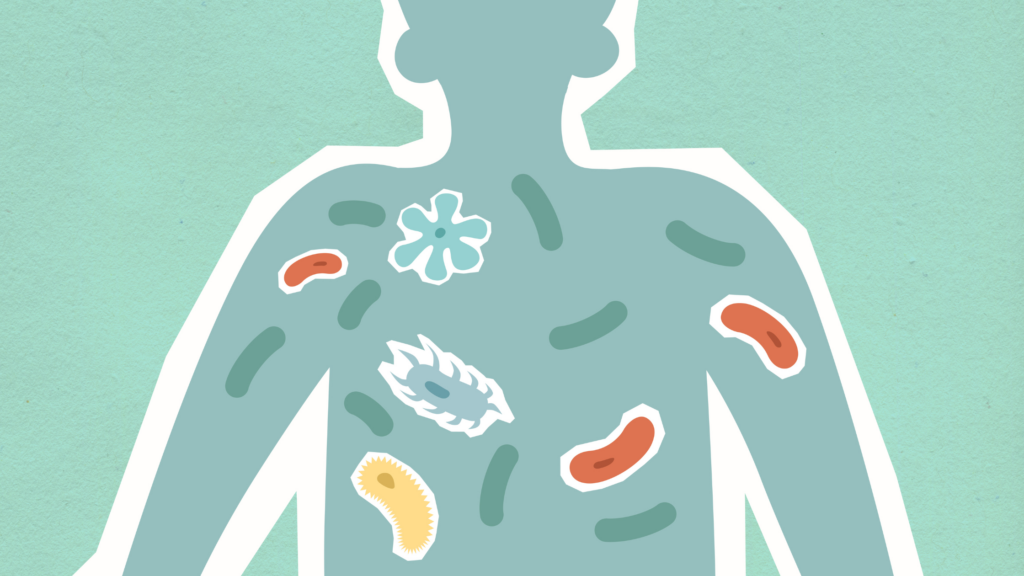
Excess sugar and artificial dyes can also work against many of the things we’re trying to support, including a healthy gut microbiome.
Today, let’s talk about how to limit sugar and artificial dyes while still letting kids enjoy Halloween.
Limit Sugar on Halloween by Spotting Hidden Sugars
Sugar isn’t always listed simply as “sugar” on an ingredient label.
Here are some of the names you might see:
- Dextrose
- Fructose
- Galactose
- Fruit juice concentrate
- Glucose solids
- High-fructose corn syrup
- Lactose
- Maltose
- Sucrose
And there are many others.
You don’t need to obsess over every ingredient your child consumes on Halloween, but knowing how to recognize added sugar can make it much easier to compare different treats.
Watch Out for Artificial Food Dyes
It’s an unfortunate truth that many candies and other “food products” marketed specifically to children in the U.S. contain artificial dyes such as FD&C Blue No. 1, FD&C Red No. 40, and FD&C Yellow No. 6.
Many of my patients experience reactions to these ingredients.
The UK has required foods containing certain artificial colors to carry a warning that they “may have an adverse effect on activity and attention in children.” The labeling requirement has been in effect since 2010.
Here in the U.S., change is happening too. In 2025, the FDA announced plans to work toward removing several petroleum-based synthetic dyes from the U.S. food supply and encouraged manufacturers to transition toward alternatives.
That is a great step in the right direction!
More Ways to Limit Sugar on Halloween
There’s another piece of the sugar-craving puzzle I like families to think about: the gut microbiome.
Research suggests that the bacteria living in the gut may influence food preferences and reward-driven eating. In animal research, changing the gut microbiome has even been shown to alter preferences for highly palatable foods.
This is one reason I recommend consistent use of HKHM Plantadophilus.
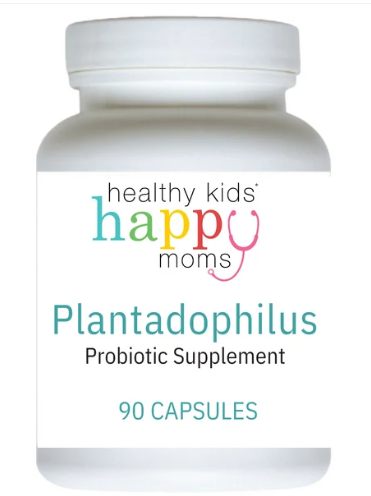
Plantadophilus contains Lactobacillus plantarum and is one of the foundational probiotics I use to support a healthier balance of bacteria in the gut. Our formula contains 2 billion CFU of L. plantarum per capsule and is designed for gentle, consistent daily microbiome support.
Over time, as we support a healthier gut microbiome, families may also notice sugar cravings begin to decrease as the palate starts to shift.
The key is consistency.
This isn’t something I would start on October 30 and expect to change your child’s Halloween cravings overnight. Think of it as part of the ongoing work of supporting a healthier gut environment.
Other Ideas to Limit Sugar on Halloween
I know convincing your child not to dive headfirst into what seems like an endless pile of Halloween candy can be a tough sell.
So instead of taking all of the fun away, here are a few simple ways to shift some of the focus away from high-sugar, ultra-processed candy.
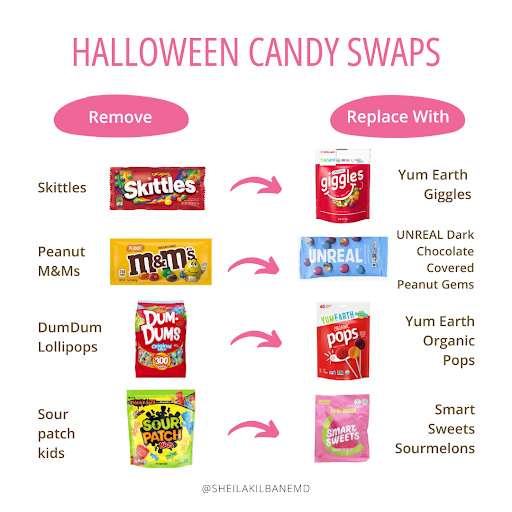
🎃 Healthy Treat Bags
Put together a Halloween-themed bag with healthier candy options, dried fruits, figs, or dates, and swap it for some or all of your child’s traditional Halloween candy.
You can also add non-food treats such as:
- Glow sticks
- Bubbles
- Stickers
- Temporary tattoos
- Small toys
This helps keep the fun without making the entire night about candy.
🎃 Candy Swap Challenge
Encourage your child to trade some of their candy for small prizes, toys, activities, or even money.
A quarter or dime per piece of candy can add up quickly if your child had a successful night of trick-or-treating!
You can also look for local businesses or organizations that offer Halloween candy exchanges.
🎃 Halloween Scavenger Hunt
Hide healthier treats or non-candy surprises around the house or yard and create your own Halloween scavenger hunt.
This can make the evening interactive and exciting while taking some of the attention away from the candy.
Most importantly, remember that Halloween is supposed to be fun. A little preparation can help your kids enjoy the holiday without turning the entire week into a sugar free-for-all.
Have a happy, healthy, and safe Halloween!
References
- Mills, C. (n.d.). The haunting facts of eating too much sugar. StateFoodSafety. Retrieved September 30, 2025, from https://www.statefoodsafety.com/Resources/Resources/the-haunting-facts-of-eating-too-much-sugar
- Qin D, Qi J, Shi F, Guo Z, Li H. About Sugar Addiction. Brain Behav. 2025 Jul;15(7):e70338. doi: 10.1002/brb3.70338. PMID: 40654193; PMCID: PMC12257121.
- Food Standards Agency. Food additives. Guidance regarding artificial food colours and required warning labels for certain colours in foods sold in the UK.
- U.S. Food and Drug Administration. HHS, FDA to Phase Out Petroleum-Based Synthetic Dyes in Nation’s Food Supply. April 22, 2025.
- de Wouters d’Oplinter A, Rastelli M, Van Hul M, Delzenne NM, Cani PD, Everard A. Gut microbes participate in food preference alterations during obesity. Gut Microbes. 2021 Jan-Dec;13(1):1959242. doi: 10.1080/19490976.2021.1959242. PMID: 34424831; PMCID: PMC8386729.