Knowing how to take a probiotic when on an antibiotic can be especially helpful during the colder months, when kids spend more time indoors and antibiotic prescriptions tend to increase. A study evaluating outpatient antibiotic prescriptions found that prescriptions were about 25% higher in winter than in summer. [1]
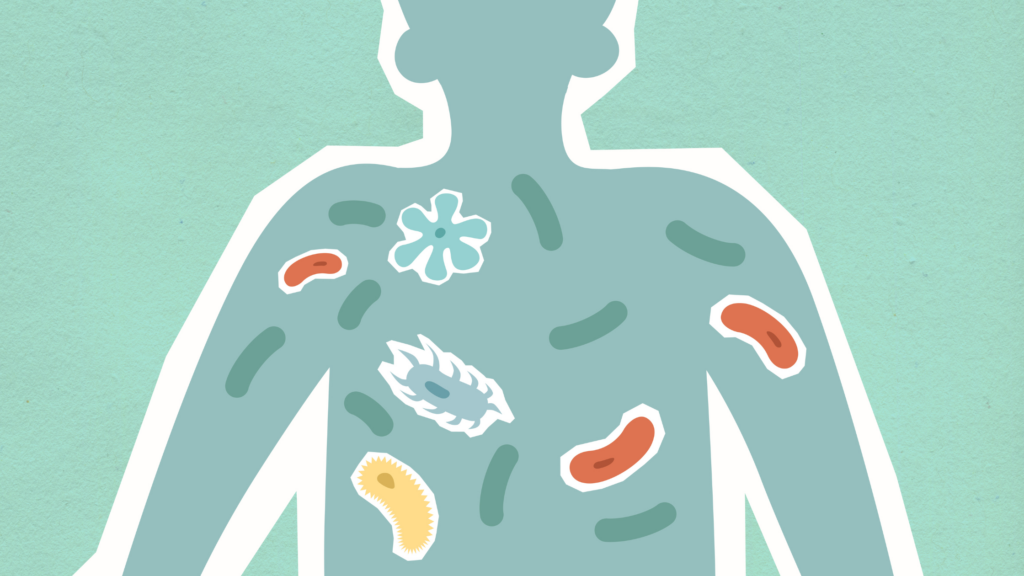
Antibiotics save millions of lives each year and are essential when truly needed. However, they can also affect the bacteria in the gut, known as the microbiome.
Up to 40% of children taking broad-spectrum antibiotics develop diarrhea. [2]
Even a one-week course of antibiotics can affect the gut microbiome for several months, with changes from certain antibiotics lasting even longer. [3]
How to Take a Probiotic When on an Antibiotic
Studies show that probiotics can help reduce antibiotic-associated diarrhea in children. [2]
The important part is when you take the probiotic.
You generally don’t want to take the antibiotic and probiotic at the exact same time. Instead, space them apart.
For example:
Breakfast: Antibiotic
Lunch: Probiotic
Dinner: Antibiotic
Bedtime: Probiotic
Aim to separate the probiotic from the antibiotic by approximately 1–2 hours.
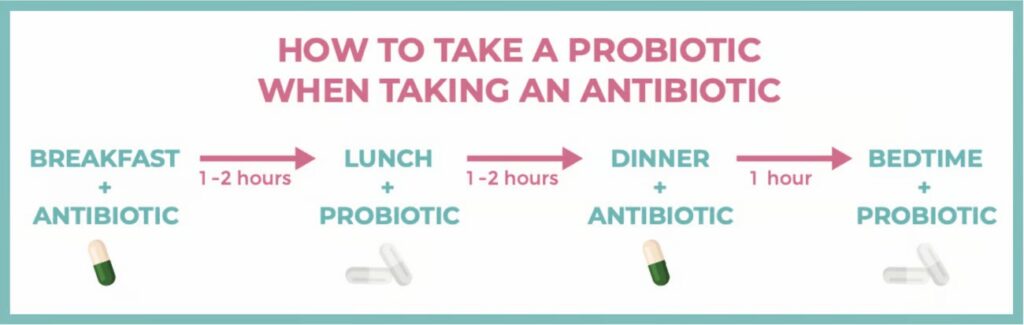
This is a simple schedule I often share with families because it makes remembering both much easier.
Probiotics to Take While on Antibiotics
There are two probiotic options I commonly use with families.
Option 1: HKHM Biome Protect 20B

HKHM Biome Protect 20B contains a blend of seven probiotics to support the gut environment while you or your child takes a necessary antibiotic.
It also does not require refrigeration, making it easy to keep on hand or take on the go.
Option 2: HKHM Plantadophilus

HKHM Plantadophilus contains the robust probiotic strain Lactobacillus plantarum, which is also one of the strains included in Biome Protect 20B.
L. plantarum has significant resistance to antibiotics, meaning antibiotics do not easily kill this particular species.
Bonus Tip for How to Take a Probiotic When on an Antibiotic: Support the Gut Before Illness Hits
Another option I like to keep on hand is HKHM SporeBiotic IG.

HKHM SporeBiotic IG is a spore-based probiotic that also contains immunoglobulins, proteins similar to those found in colostrum that help support the microbiome and immune cells along the GI tract.
These immunoglobulins can also help support the body’s ability to bounce back after an illness.
How to Take a Probiotic When on an Antibiotic: Keep Probiotics on Hand
When your child gets sick and an antibiotic is needed, you usually don’t have much time to prepare.
That’s why I encourage families to keep probiotics on hand. Then, if an antibiotic becomes necessary, you already have one available and can begin supporting the gut right away.
And remember, antibiotics absolutely have an important role in medicine. The goal isn’t to avoid an antibiotic when your child truly needs one. It’s to support their gut microbiome while they take it.
Always follow your healthcare provider’s instructions for your child’s antibiotic and talk with them about any questions regarding medications or supplements.
References
- Suda KJ, Hicks LA, Roberts RM, Hunkler RJ, Taylor TH. Trends and seasonal variation in outpatient antibiotic prescription rates in the United States, 2006 to 2010. Antimicrob Agents Chemother. 2014;58(5):2763-2766. doi:10.1128/AAC.02239-13. PMID: 24590486; PMCID: PMC3993241.
- Hayes SR, Vargas AJ. Probiotics for the Prevention of Pediatric Antibiotic-Associated Diarrhea. Explore (NY). 2016;12(6):463-466. doi:10.1016/j.explore.2016.08.015. PMID: 27688016; PMCID: PMC5140692.
- Löfmark S, Jernberg C, Jansson JK, Edlund C. Clindamycin-induced enrichment and long-term persistence of resistant Bacteroides spp. and resistance genes. Journal of Antimicrobial Chemotherapy. 2006;58(6):1160–1167. https://doi.org/10.1093/jac/dkl420