The Dr. Aron Method for eczema takes a closer look at what is happening within the skin microbiome. October is Eczema Awareness Month, making it an important time to talk about this often-overlooked aspect of eczema treatment.
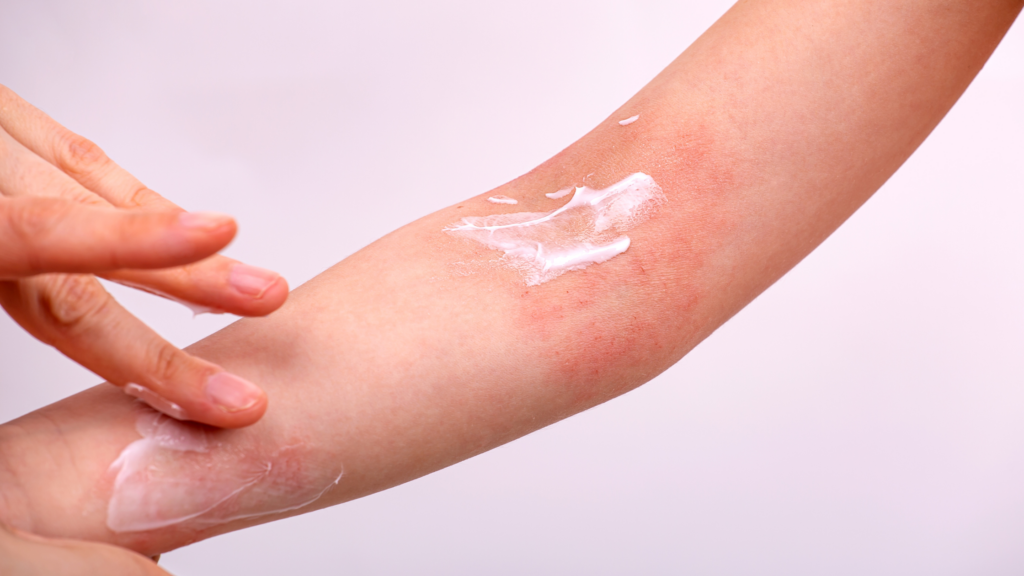
Eczema is more than dry, irritated skin. Often times, the skin barrier is disrupted, inflammation is present, and the balance of bacteria living on the skin is impacted.
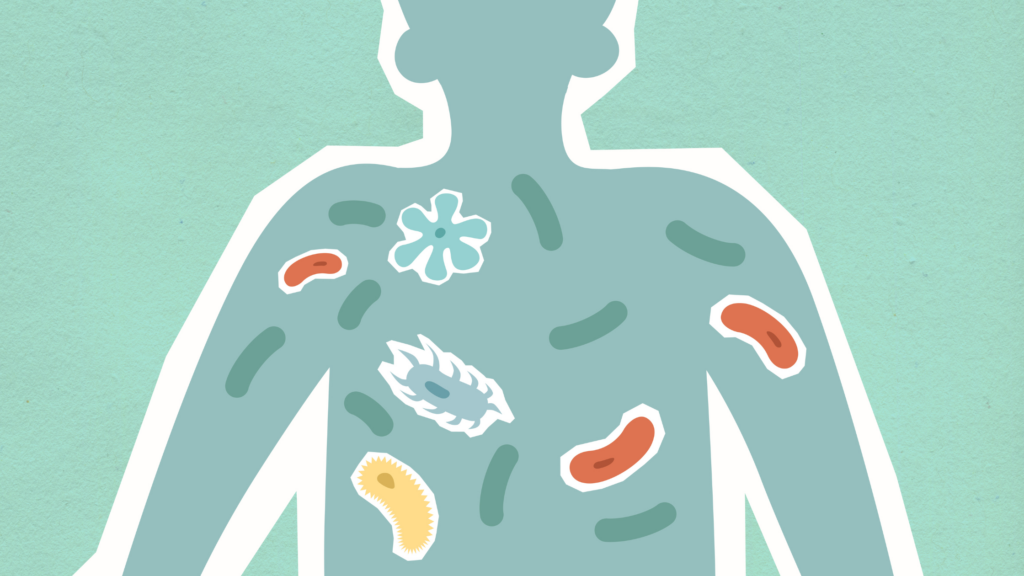
One bacterium that is especially important in eczema is Staphylococcus aureus, or S. aureus. Research shows that S. aureus frequently colonizes on the skin in people with atopic dermatitis (eczema) and may contribute to worsening symptoms. [1]
For children with more persistent or severe eczema, the approach we use in our practice is “CASM,” widely known as the Dr. Aron Method or Aron Regimen.
What Is the Dr. Aron Method for Eczema?
The Dr. Aron Method is also known as CASM, which stands for:
- Compounded Antibacterial
- Steroid
- Moisturizer
Rather than addressing only one piece of the eczema cycle, the Dr. Aron Method combines three topical components into a single compounded treatment. [2]
Each has a different job:
Antibacterial: Helps address excess bacteria on the skin, particularly Staph aureus.
Steroid: Helps decrease inflammation, redness, and itching.
Moisturizer: Supports the damaged skin barrier while also serving as the base for the compounded medication.
The goal is to address the bacterial component, inflammation, and damaged skin barrier at the same time.
Because CASM contains prescription medications and the exact formulation and treatment plan need to be individualized, this is NOT a topical treatment you should recreate on your own. Please seek out medical care from a qualified healthcare professional.
Why Does Staph Matter in Eczema?
When the skin barrier is healthy, it does a good job of protecting us from the outside world.
With eczema, that barrier becomes disrupted. This can create an environment where Staph aureus is more likely to thrive.
Research continues to show an important relationship between S. aureus and atopic dermatitis. S. aureus can contribute to skin damage and inflammation, and researchers have even observed the bacteria adapting within the skin microbiome of children with eczema. [1]
This is why simply calming the inflammation does not always solve the entire problem.
A topical steroid can be very effective at decreasing inflammation. But in some children with persistent eczema, we also need to think about the bacteria living on the skin and the integrity of the skin barrier.
That is what makes the three-part CASM approach different.
At the same time, I am also looking at what may be driving inflammation from the inside, including nutrition, the gut microbiome, allergies, and environmental triggers.
If you want to understand more about this gut-skin connection, read my other blog post: Eczema: Much More than a Skin Condition.
What Does the Research Say About CASM?
There is growing research on the CASM approach.
A 2017 case series followed 116 patients with atopic dermatitis treated with compounded antibacterial, steroid, and moisturizer. Researchers observed improvements in both eczema severity and the amount of body surface area affected. [2]
A larger study published in Pediatric Dermatology followed patient-reported outcomes from 728 people using CASM. The researchers found significant improvement over time, with much of the improvement occurring during the first 30 days of treatment. [3]
It is important to put this research into context. These studies are encouraging, but CASM has not been evaluated in large, blinded, placebo-controlled trials. [3]
That is another reason I view the Dr. Aron Method as an individualized medical treatment rather than a one-size-fits-all eczema remedy.
Can You Start Treating Eczema at Home?
For mild-to-moderate eczema, there are several steps families can begin at home before moving into prescription treatment.
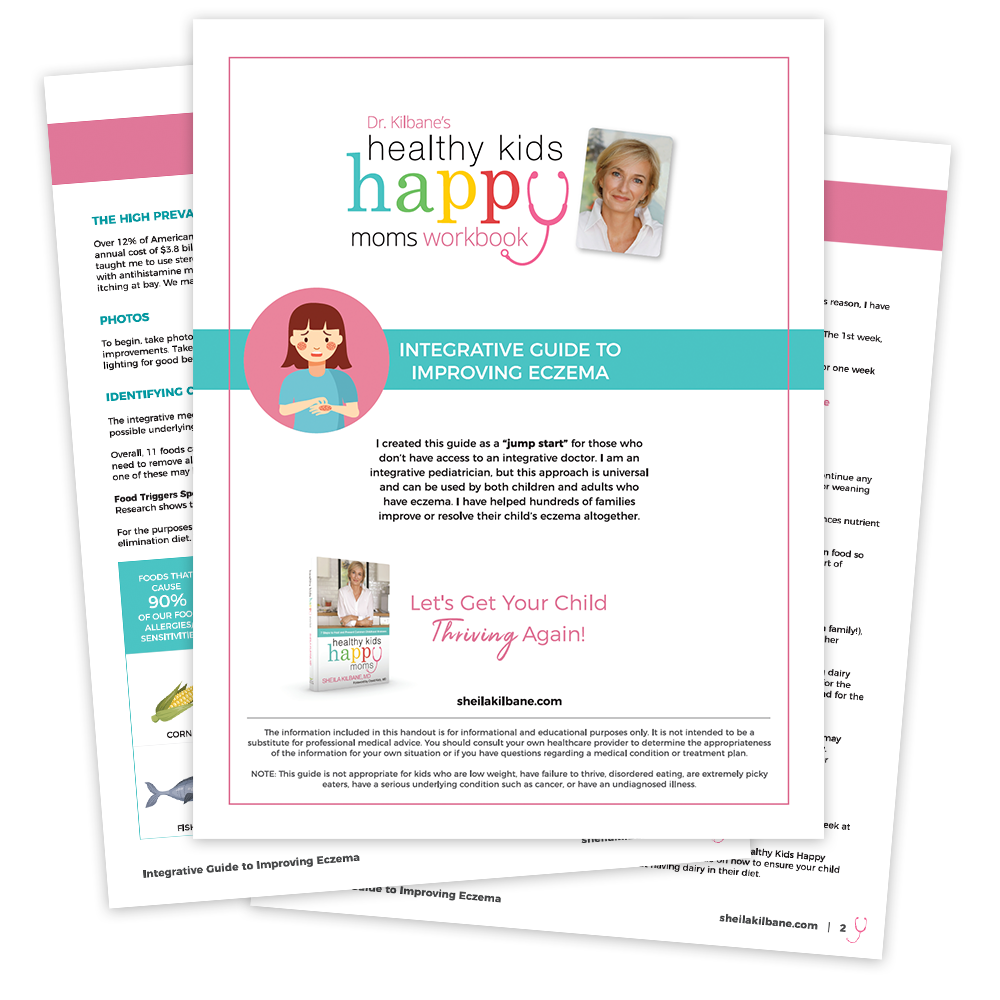
I created my free Eczema Jump Start Guide to walk families through the foundational pieces of my approach, including common food triggers, food replacements, and nutritional support.
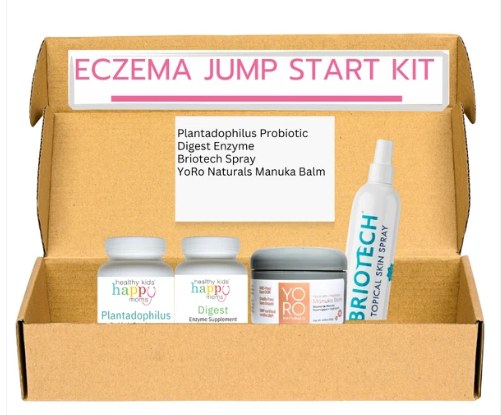
We also have our Eczema Jump Start Kit to make it easier to begin supporting both the skin and gut microbiome.
For many families dealing with milder eczema, these are great places to start.
For more severe or persistent eczema, we may need to go further.
That can include individualized testing to better understand what is driving your child’s inflammation and, when appropriate, a prescription topical treatment such as CASM.
Because both testing and the compounded topical prescription require working with a healthcare provider, I recommend scheduling a 15-minute informational call with our team if your child’s eczema is more severe or you have already tried the at-home steps without enough improvement.
Want to Learn More About the Dr. Aron Method?
If you want to go deeper into this approach, you can watch my full eczema masterclass with Dr. Richard Aron, the world-renowned dermatologist behind the Aron Regimen.
References
- Key FM, Khadka VD, Romo-González C, Blake KJ, Deng L, Lynn TC, Lee JC, Chiu IM, García-Romero MT, Lieberman TD. On-person adaptive evolution of Staphylococcus aureus during treatment for atopic dermatitis. Cell Host Microbe. 2023 Apr 12;31(4):593-603.e7. doi: 10.1016/j.chom.2023.03.009. PMID: 37054679; PMCID: PMC10263175.
- Lakhani, F., Lee, K. and Lio, P.A. (2017), Case Series Study of the Efficacy of Compounded Antibacterial, Steroid, and Moisturizer in Atopic Dermatitis. Pediatr Dermatol, 34: 322-325. https://doi.org/10.1111/pde.13141
- Rajkumar J, Jetter N, Samuels K, Schwartz A. Combined antibiotic, steroid, and moisturizer for atopic dermatitis: A two-year case series of patient-reported outcomes. Pediatr Dermatol. 2021 May;38(3):623-628. doi: 10.1111/pde.14458. Epub 2020 Dec 12. PMID: 33314261.