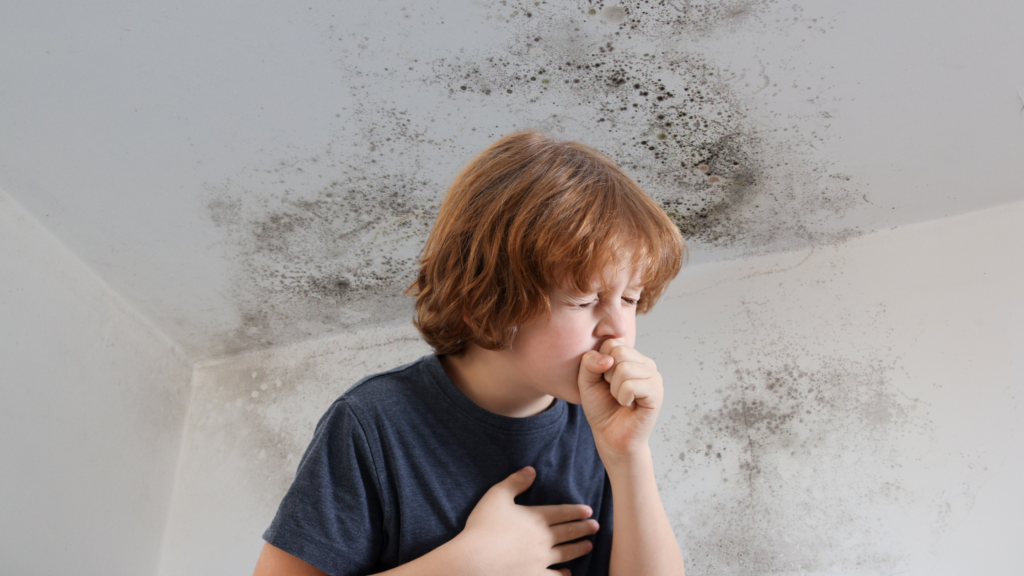
If you or your child has ongoing congestion, sinus issues, eczema flares, asthma symptoms, headaches, fatigue, brain fog, digestive problems, or mood changes, mold exposure may be one piece of the puzzle.
This is a topic more and more families are asking about. Mold exposure can be easy to miss, especially when symptoms overlap with other recurrent illnesses and chronic inflammation.
As you read through this guide, remember, you do not need to do everything at once.
When I work with families who are concerned about mold, I like to simplify the process into three practical steps:
- Assess your home environment
- Improve indoor air quality
- Support the body during recovery
Why Mold Can Affect the Whole Family (And How That Impacts Mold Exposure Symptoms)
Mold is not just about what you can see growing on a wall. In many homes, the bigger issue is hidden moisture. Mold and moisture go hand in hand, which is why I always encourage families to start by looking for signs of water intrusion, excess humidity, or musty odors.
Children can be especially sensitive and mold exposure may show up as:
- Chronic congestion or cough
- Recurrent sinus infections
- Asthma flares or wheezing
- Fatigue or brain fog
- Headaches
- Skin rashes or eczema
- Irritability or mood changes
- Digestive symptoms
These symptoms do not automatically mean mold is the cause. But if they keep coming back and nothing else fully explains them, it may be worth digging deeper.
Step 1: Assess Your Home Environment First
Before you jump into expensive testing or start throwing things away, start by assessing your home.
Look for Moisture, Not Just Visible Mold
Walk through your home and pay close attention to:
- Water stains on ceilings or walls
- Peeling paint or bubbling drywall
- Musty odors
- Condensation on windows
- Damp carpets or flooring
Also check the highest-risk areas:
- Bathrooms
- Kitchens, especially under sinks and around dishwashers
- Laundry rooms
- Basements
- Crawl spaces
- Attics
- Around windows and doors
- HVAC vents and nearby ductwork
If your home has a crawl space, ask:
- Is there a vapor barrier?
- Is there a dehumidifier?
- Are there damp areas?
- Does water collect after rain?
- Is there a sump pump if needed?
Check Indoor Humidity (Sneaky Culprit of Mold Exposure Symptoms)
Humidity matters more than most people realize.
Indoor humidity should ideally stay between 35% and 50%. Once humidity is consistently above 55%, mold growth becomes much more likely.
A few simple action steps:
- Place humidity monitors in several rooms
- Monitor crawl spaces and basements
- Use a dehumidifier if levels stay elevated
- Pay attention to how well your HVAC system removes moisture
Mold Exposure Symptoms: When Mold Testing Makes Sense
If your home history and symptoms raise concern, testing can help clarify where the problem is coming from.
In general, I recommend working with an independent indoor environmental professional. The company doing the inspection and testing should not be the same company doing the remediation. That separation helps reduce conflicts of interest and gives families a clearer plan.
A good environmental assessment should look beyond air samples alone. It may also include swabs or tape samples, plus inspection of high-risk areas like ductwork, HVAC components, attic spaces, basement areas, and crawl spaces.
Step 2: Improve Indoor Air Quality
We breathe a tremendous amount of air every day, so air quality plays a major role in mold recovery.
Even before a family has every answer, there are often practical ways to improve the home environment right away.
Focus on the Basics First
Start here:
- Use HEPA air purifiers in bedrooms
- Replace HVAC filters regularly
- Make sure bathroom fans vent outside
- Keep indoor humidity below 50% when possible
- Open windows when weather and outdoor air quality allow
I often recommend a medical-grade HEPA air filter for families working on mold concerns because reducing airborne particles can make a meaningful difference.
Do Not Skip the Source of the Moisture
This part is important: cleaning without addressing the moisture source usually does not solve the problem.
If there has been water damage, the goal is not just to “kill mold.” The source of moisture has to be identified and corrected. Otherwise, symptoms may continue and remediation may fall short.
A Note on Remediation
Families are often tempted to clean ductwork, replace furniture, or start tearing out materials immediately. Sometimes those steps are needed, but they should happen in the right order.
A strong remediation plan should:
- Identify what needs to be monitored, repaired, replaced, or remediated
- Spell out the order of operations
- Include containment measures to prevent spread
- Be followed by post-remediation clearance testing
That last step matters. If remediation was done, it is important to retest afterward to confirm the job was successful.
Step 3: Support the Body During Recovery
Once the environment is being addressed, the next step is helping the body recover.
Mold toxins are generally cleared through the liver, gut, kidneys, and lymphatic system. This is why I think about support in layers rather than relying on one single supplement or one single food.
Start With Foundations to Reduce Mold Exposure Symptoms
Before jumping into aggressive detox strategies, I like to start with foundational support:
- Gut support
- Digestion support
- Healthy inflammatory balance
- Antioxidant support
- Liver and cell membrane support
For many families, this means starting with the basics and introducing supplements one at a time.
If you want the exact supplement protocol I use as a starting point, you can view it here: Supplement Protocol for Mold Exposure Support.
⭐ Supplement Spotlight ⭐
The phase 1 protocol I recommend is the Core Four Bundle + HKHM Vitamin D3 + K2.


Nutrition Support During Mold Recovery
Food alone usually is not the whole answer, but it can absolutely support the process.
Below is a simplified mold-supportive food guide adapted from educational material by Dr. Jill Crista.
Foods to Limit to Reduce Mold Exposure Symptoms
These are commonly reduced during mold recovery, especially in more sensitive individuals:
- Sweets and added sugar
- Dried fruit
- Yeast and leavened breads
- Simple carbohydrates
- Mushrooms
- Corn and potatoes
- Vinegar-heavy foods and condiments
- Soy sauce
- Aged or moldy cheeses
- Peanuts and peanut butter
- Alcohol
- Fermented beverages like cider or kombucha
Foods to Emphasize
These foods may be especially helpful during recovery:
Vegetables and herbs
- Garlic, onions, scallions, chives, leeks
- Broccoli and Brussels sprouts
- Cabbage
- Celery and cucumber
- Bitter greens like arugula, kale, dandelion greens, endive, and watercress
Colorful produce
- Colorful vegetables
- Colorful fruits, as tolerated
Healthy fats and proteins
- Avocado
- Olives and olive oil
- Eggs
- Fish
- Fresh seeds and nuts
Helpful extras
- Yogurt with live cultures
- Turmeric
- Parsley
- Rosemary
- Thyme
- Oregano
- Basil
Some families also like simple food-based binders, such as small amounts of ground flax, chia, or pumpkin seeds added to food or smoothies.
Common Mistakes Families Make When Dealing With Mold Exposure Symptoms
Starting With Supplements Before the Home
If the environment is still driving exposure, supplements alone usually will not get you very far.
Cleaning Without Fixing the Moisture Source
Mold and moisture go together. If the water issue is still there, the problem usually comes back.
Using the Remediation Company as the Tester
It is usually better to have an independent inspector create the plan and a separate company carry it out.
Forgetting About HVAC and Ductwork
HVAC systems, vents, and ductwork can be part of the picture, especially in homes with older or damaged materials.
Trying to Do Everything at Once
Lastly, this process can feel overwhelming. A step-by-step plan is almost always better than panic-driven decisions.
Final Thoughts on Mold Exposure Symptoms
Mold can be a missing piece behind chronic symptoms, but it is not something families need to navigate blindly.
When you break it down into the right order, it becomes much more manageable:
- Assess the environment
- Improve indoor air quality
- Support the body thoughtfully
That is the framework I keep coming back to because it helps families take action without getting overwhelmed.
If you want help putting the pieces together for your family, please book a free 15-minute informational call with one of our Patient Care Coordinators.