If you’ve ever found yourself Googling “how to help my constipated child,” you are not alone. Constipation is one of the most common concerns I see in pediatric practice — and one of the most stressful for families.
Many parents come to me feeling overwhelmed and unsure what to do next. Their child may be complaining of stomach pain, avoiding the bathroom, or having unexpected stool accidents despite “not going very often.” Some families have already tried increasing fiber, changing diet, or starting medications without lasting improvement.
Constipation isn’t simply about helping a child have a bowel movement today.
It’s about understanding why stool is building up in the first place and helping the bowel relearn how to function comfortably again.
The good news is that with the right approach, healing is absolutely possible.
Understanding the Constipation Cycle
Constipation often begins after a painful bowel movement.
To avoid discomfort, children start holding stool. Over time, stool builds up inside the colon. The rectum stretches, and the nerves that normally signal the urge to go become less sensitive.
Parents are often surprised when accidents begin happening even though their child is constipated.
Soft stool can leak around hardened stool trapped higher in the colon.
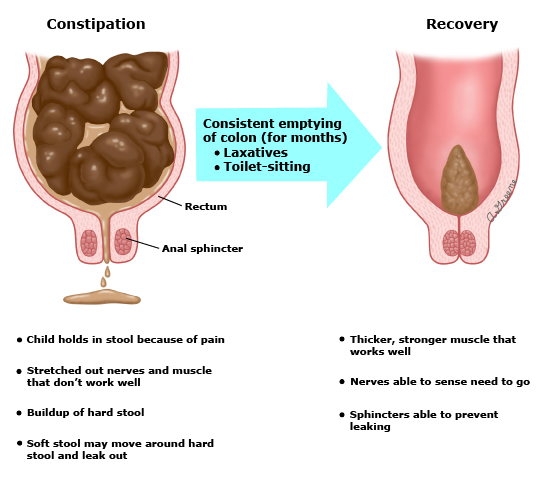
This diagram shows how stool buildup stretches the bowels and how consistent treatment allows the colon muscles and nerves to recover again.
Healing requires fully emptying the colon and then allowing time for bowel retraining.
Why Stool Accidents and Withholding Happen
Many families worry that stool accidents mean a child is being careless or not paying attention.
In reality, accidents are often a sign of significant constipation.
When the colon stretches, children may lose the normal sensation that tells them they need to go. Stool withholding can also develop after painful experiences in the bathroom.
Understanding this removes blame and helps families focus on healing rather than frustration.
One of the Most Overlooked Fixes: Toilet Positioning
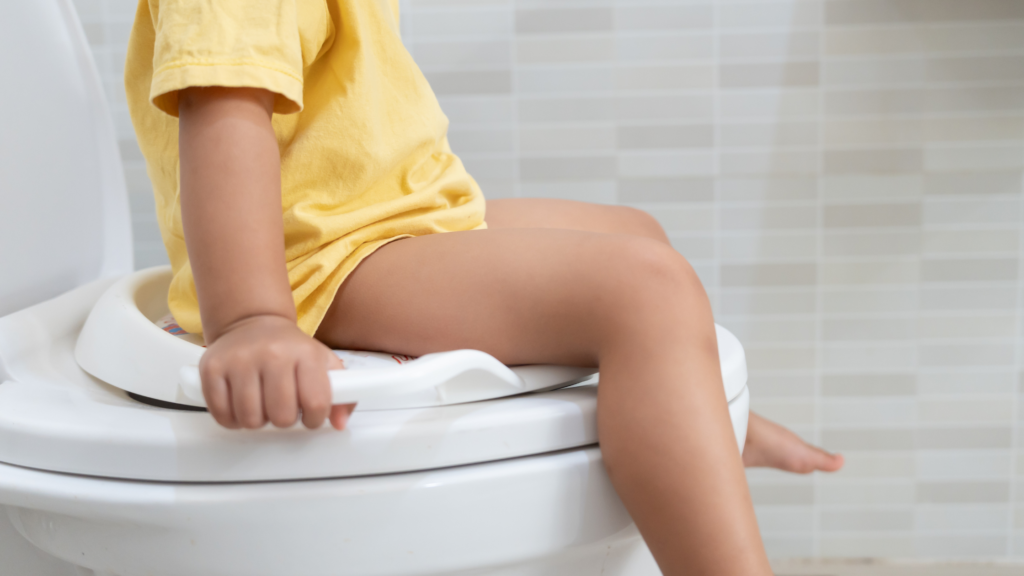
Many children sit on the toilet with their feet dangling.
This position tightens pelvic floor muscles and makes stool harder to pass.
Using a stool or Squatty Potty allows the knees to sit above the hips, helping relax the pelvic floor and reduce pressure during bowel movements.
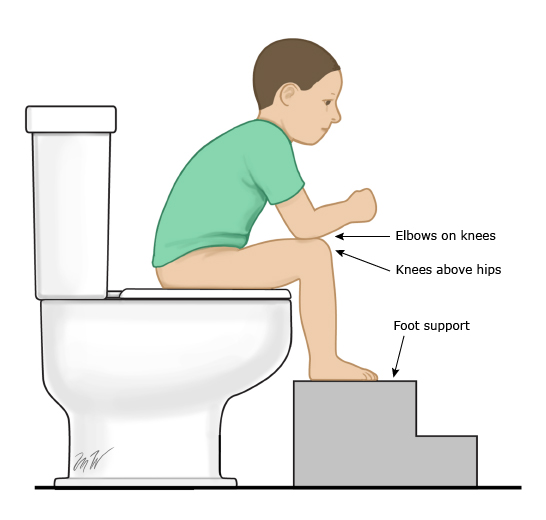
Even small positioning changes can dramatically improve comfort and confidence for children who struggle with withholding stool.
How to Help My Constipated Child: Supporting Healthy Bowel Movements Naturally
Daily habits play a powerful role in bowel motility.
I encourage families to focus on:
- Drinking enough water (approximately half of body weight in ounces daily).
- Sitting on the toilet consistently after meals.
- Gentle abdominal warmth using a heating pad in the evening.
- Outdoor movement and regular physical activity.
Hydration is especially important because the colon absorbs water from stool when the body is dehydrated, making stool harder to pass.
The Nervous System Connection Most Parents Don’t Expect
Constipation is closely connected to the nervous system.
When children feel stressed, rushed, or anxious, digestion slows because the body shifts into a “fight or flight” state.
Simple activities that stimulate the vagus nerve can help move the body into a “rest and digest” state:
- Deep belly breathing
- Box breathing exercises
- Singing or humming
- Gargling after brushing teeth
Epsom salt baths can also support relaxation while providing magnesium absorbed through the skin.
Supporting nervous system regulation often improves bowel function more than families expect.
Magnesium Support and the Clean-Out Phase: How to Help My Constipated Child
When stool has built up for weeks or months, a clean-out phase is sometimes necessary before healing can begin.
Many families find it helpful to begin a clean-out when they are home for a few days — often starting Friday after school and continuing through the weekend.
Because stools may become loose or watery during this process, temporary accidents can occur. While this may feel discouraging at first, it is often a sign that the colon is successfully emptying.
In my practice, Healthy Kids Happy Moms Advanced Magnesium is often my preferred starting support when appropriate.
Magnesium helps draw water into stool while also relaxing digestive muscles.
Capsules may be swallowed or opened and mixed into food or drinks, and powder options can be mixed into water or smoothies depending on a child’s age and preference.
The dose is typically started lower and gradually increased until daily soft stools are achieved.
Adequate hydration is especially important during this phase to safely support elimination.
⭐ Supplement Spotlight ⭐



How to Help My Constipated Child: When MiraLAX Is the Right Choice
If a child has not had a bowel movement after approximately 48 hours of magnesium support during a clean-out, MiraLAX may be appropriate.
Short-term use can help soften stool enough to allow the colon to empty completely when significant stool buildup is present.
Higher dosing is typically used only briefly and then tapered gradually once daily soft bowel movements are established.
The goal is bowel retraining — not long-term dependence whenever possible.
Used thoughtfully, MiraLAX can be an important tool in helping children move forward.
When to Call Your Pediatrician
While constipation is very common, there are times when additional medical evaluation is important.
You should contact your pediatrician if your child:
- Has severe or worsening abdominal pain
- Experiences vomiting along with constipation
- Has blood in the stool
- Has persistent stool accidents despite treatment
- Is not improving after consistent clean-out and bowel retraining efforts
Working closely with your healthcare provider helps ensure the safest and most effective plan.
Why Healing Takes Time
Parents often expect constipation to resolve quickly.
But when the colon has stretched and nerves have dulled, healing takes consistency.
Many children need several weeks to months of daily soft stools before normal sensation fully returns.
This is not failure. It’s recovery.
Consistency with hydration, positioning, nervous system support, and stool softening strategies allows the bowels to regain strength.
How to Help My Constipated Child: Next Steps
If your child struggles with constipation or stool accidents, know that effective solutions are available.
My private practice works with families to create personalized plans that support healing and long-term digestive health.
Schedule a consultation with a Patient Care Coordinator to learn more.