
A multivitamin for kids and adults provides a broad base of essential vitamins and minerals to help support overall health and wellness. Taking one daily is a simple way to help fill common nutrient gaps and complement a balanced diet.
I like to think of supplements, especially multivitamins, as “nutritional insurance.”
Food is always the foundation. A quality multivitamin for kids and adults is a gentle, consistent way to build on that foundation and support long-term wellness.
Even with the best intentions, most kids and adults do not consistently eat enough nutrient-dense foods. In fact:
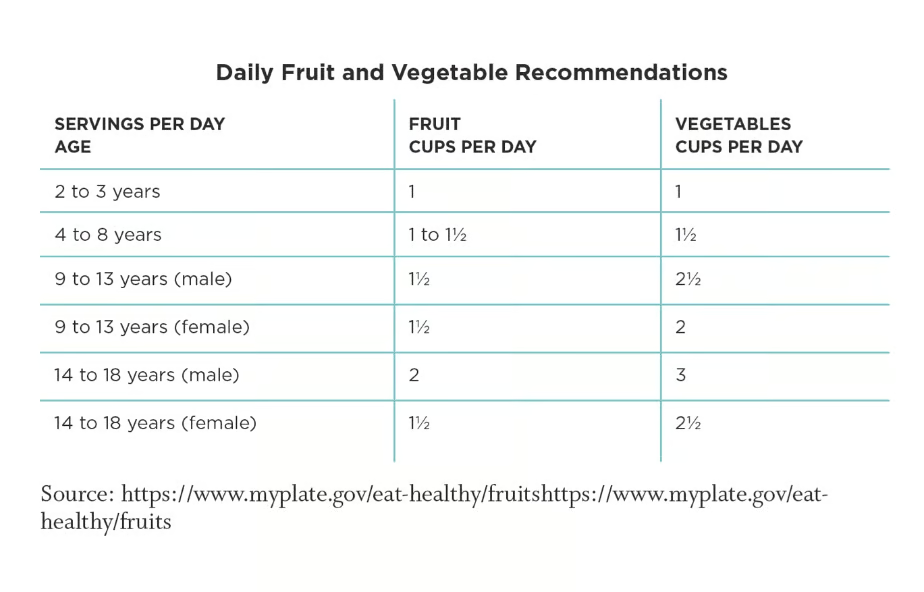
- 60% of kids do not eat enough fruit to meet daily recommendations, and 93% do not eat enough vegetables. [1,2]
- Some research suggests that certain crops may contain lower levels of some nutrients than they did several decades ago. [3]
- Recent CDC data found that about 30% of U.S. children and adolescents consumed fast food on a given day. [4,5]
- Our ability to break down and absorb nutrients from food can also be affected by inflammation, illness, stress, increasing age, and certain medications. [6]
I am often asked what multivitamin kids and adults should take. We do a significant amount of research on our products before we begin recommending them.
We look at the quality of the ingredients, the specific forms of vitamins and minerals included, and whether the product contains unnecessary fillers. Because we focus on quality, many of our supplements can be used by both kids and adults.
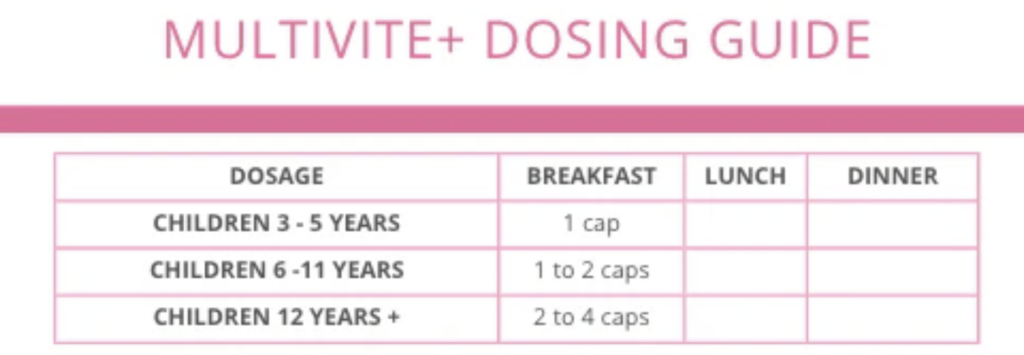
Our HKHM MultiVite+ is no different. It can be used by both children and adults, with dosing based on age and individualized guidance.
Multivitamin for Kids and Adults: What HKHM MultiVite+ Includes
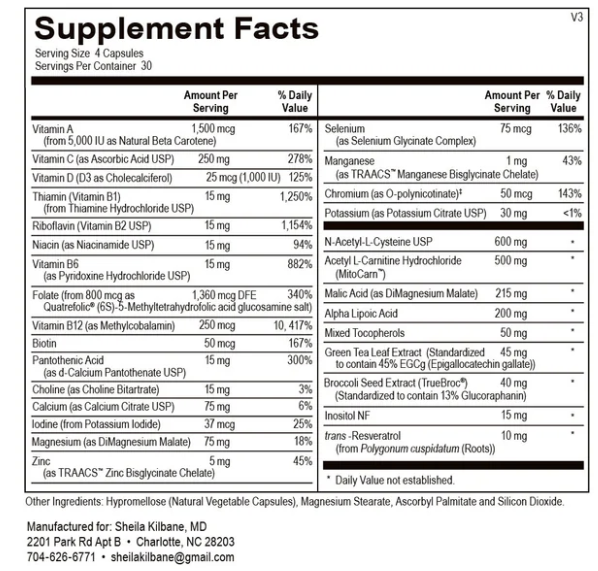
Active B vitamins
This includes 5-MTHF, along with the mineral cofactors that help B vitamins function properly. This can be especially relevant for individuals with an MTHFR variant.
Trace minerals
This includes magnesium, zinc, selenium, and chromium, which can be difficult to obtain consistently when eating the Standard American Diet.
Phytonutrients
This includes broccoli seed extract, green tea extract, and resveratrol, which provide antioxidant support and help protect cells from oxidative stress.
Mitochondrial support as part of a multivitamin for kids and adults
This includes N-acetyl-L-cysteine, acetyl L-carnitine, and alpha lipoic acid, which support cellular energy production.

Multivitamin for Kids and Adults: Why HKHM Multvite+ Stands Out
This multivitamin stands out from typical children’s and adult multivitamins because of its added mitochondrial support.
The mitochondria are often called the “powerhouses of the cell.” They supply the energy our cells need for survival and overall function. Stress, illness, poor sleep, certain medications, and rapid growth can all increase the body’s nutritional demands. When nutrition is subpar, we may use nutrients faster than they can be restored.
Lastly, my personal, slightly vain favorite thing about HKHM MultiVite+ is the nutritional support it provides for our skin, hair, and nails.
Remember, the body and gut do not change overnight. Consistent support gives the body time to build and replenish its nutritional foundation.
On our online store, you can find a dosing guide by age.
Always consult your healthcare professional for individualized recommendations and guidance.
References
- “Children Eating More Fruit, but Fruit and Vegetable Intake Still too Low.” Centers for Disease Control and Prevention. August 5, 2014. https://www.cdc.gov/media/releases/2014/p0805-fruits-vegetables.html.
- “Children Eating More Fruit, but Fruit and Vegetable Intake Still too Low.”
- Davis, Donald R., Melvin D. Epp, and Hugh D. Riordan. “Changes in USDA Food Composition Data for 43 Garden Crops, 1950 to 1999.” Journal of the American College of Nutrition 23, no. 6 (December 2004): 669–82. https://doi.org/10.1080/07315724.2004.10719409.
- “Food Consumption, 2020.” Centers for Disease Control and Prevention. February 5, 2021. https://www.cdc.gov/nchs/products/visual-gallery/fast-food-
- “Fast Food Consumption Among Adults in the United States, 2013–2016.” NCCHS Dta Brief no. 322. National Center for Health Statistics. October 2018. https://www.cdc.gov/nchs/products/databriefs/db322.htm#:~:text=In%202013%E2%80%932016%2C%2036.6%25,adults%20aged%2060%20and%20over.
- Research Findings #21: Health Care Expenses in the United States, 2000. Agency for Healthcare Research and Quality, Rockville, MD. April 2004. Http://Www.Meps.Ahrq.Gov/Data_files/Publications/Rf21/Rf21.Shtml.